

 Vendor Portal

Author: Mark Ainely | Partner GC Realty & Development & Co-Host Straight Up Chicago Investor Podcast
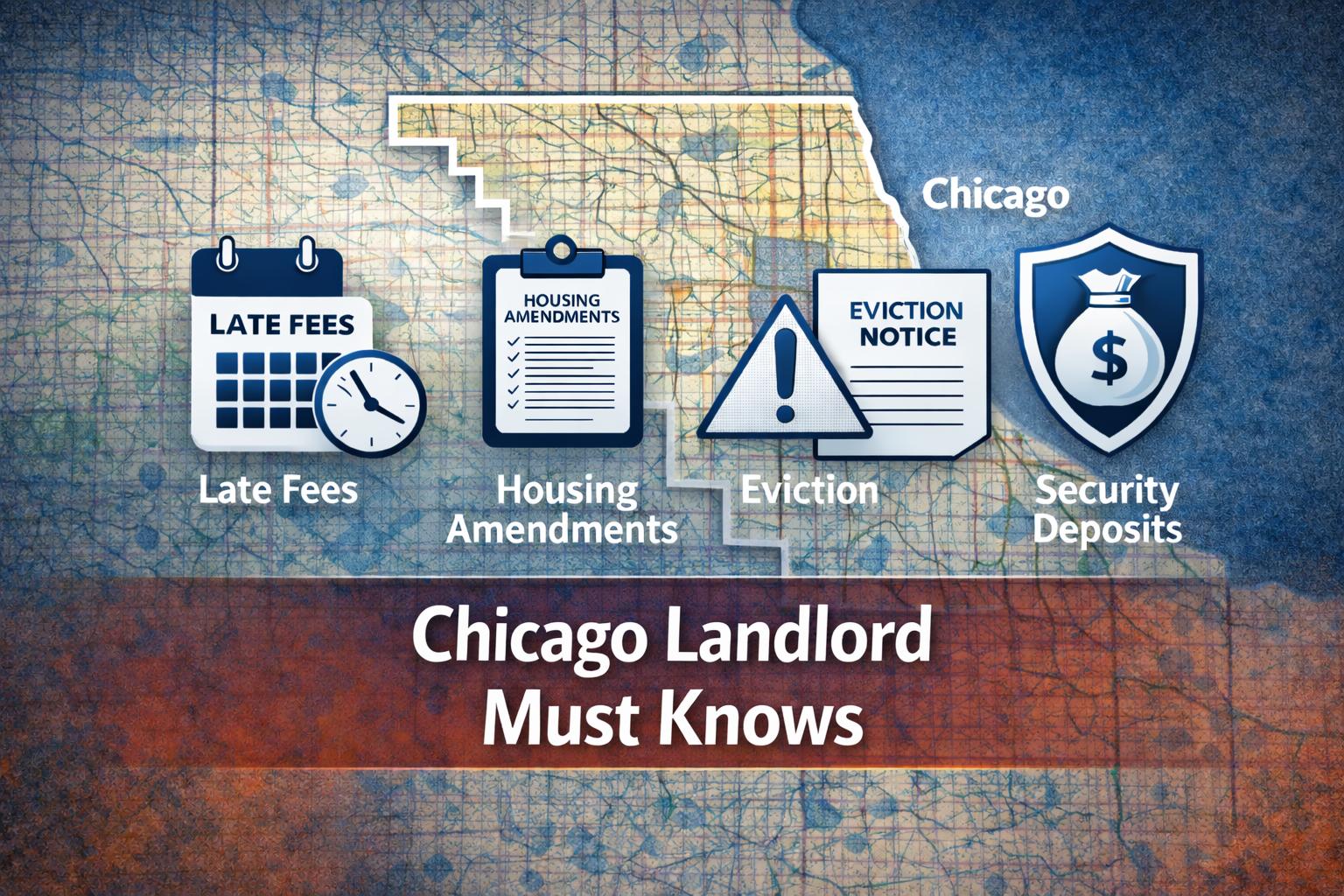
If you own rental property in Chicagoland or Cook County, you should be aware of several laws that can cause you expensive headaches. At GC Realty & Development, LLC, we stay up to date with ever-changing legislation that affects how landlords operate. Below are just a few of the landmines we see unaware landlords walk into that can cost you BIG TIME.
Get insider insights every Chicago landlord should know before making costly mistakes.
Download the Free Guide: What They Don’t Tell You About Real Estate Investing
Security Deposits Minefields
Most landlords assume they should require security deposits from all new tenants to protect themselves and hold tenants accountable. How much might be up for debate (one month’s rent, first and last months’ rent, or another arbitrary amount), but most assume this is standard fare. It helps protect properties while dealing with tenant damage or unpaid rent.
Unfortunately, there have been issues with how security deposits are managed during and at the termination of a lease agreement. Some landlords combine tenants' security deposits in their own bank accounts. Others cause issues when they retain some of the deposits upon move-out, without documented explanations that pass legal muster.
That’s why Chicago has laws to protect both landlords and tenants. In 2024, the state of Illinois enacted new Security Deposit Laws. They outline how landlords can collect, keep, and manage security deposit funds.
The Chicago Residential Landlord Tenant Ordinance (CRLTO) and the Cook County Residential Landlord Tenant Ordinance (RLTO) both have specific requirements for how landlords must handle security deposits.
The CRLTO requires landlords to store security deposits in a separate interest-bearing account. They must also provide receipts for deposits and pay out the interest accrued on them annually. If a landlord fails to comply with these requirements, the tenant may be entitled to damages, including twice the security deposit plus interest.
The RLTO states that landlords must maintain deposits in a separate account from personal accounts. They must also provide a receipt to tenants and return security deposits within 30 days with an itemized list of deductions. The RTLO caps security deposits at 1.5 times the monthly rent and sets up penalties when security deposits are not returned.
Getting this wrong can delay your ability to renew or place tenants at a higher rent rate. Miss one deadline or mishandle the funds, and your “deposit” could cost you triple in court. To circumvent potential security deposit issues, some landlords are turning to non-refundable move-in fees.
Bed Bug Procedures
Bed bug infestations are an ongoing issue, especially in urban areas like Chicago. But did you know that, regardless of how they enter one of your rental properties, you are responsible for solving the situation (and quickly)?
City of Chicago beg bug ordinances require landlords to provide tenants with a city-approved bed bug information brochure at lease signing. If a tenant reports bed bugs, the landlord has 10 days to address the issue by hiring a professional pest management company. In multi-unit buildings, neighboring flats must also be inspected. DIY “solutions” rarely work, and legally won’t cut it. Once properly addressed, paperwork must stay on file for three years.
Landlords need to know how to protect themselves with legal yet firm pest clauses in their leases to help minimize infestations and associated costs. Provide unclear information, apply illegal solutions, or fail to document compliance properly, and you could find yourself with pesky legal consequences.
Rent Increase Notice Requirements
Most landlords understand they have to set their rent rates in line with market rates. They cannot just change how much they think is fair based on gut feelings or mortgage payments. Most also know they can’t randomly increase the monthly rent during a fixed-term lease (unless the lease allows it).
But, as part of Chicago’s Fair Housing Ordinance, landlords have to follow long lead times for providing notice of rent raises to tenants. These timeframes allow current tenants to find other housing if they cannot afford/don’t want to pay a higher rent for their current home.
The tricky part is knowing how much notice you must give as the landlord. Different jurisdictions require different notice periods (30, 60, or even 120 days in some cases). Plus, some of the notice timelines depend on how long the tenant has been living in your rental property.
Learn the Eviction Process Before You Need It
In Cook County, the eviction process follows a very strict timeline for each action to evict nonpaying tenants successfully. By the time you need to evict, it's too late to start learning.
If you don’t know what you’re doing with notices and partial payment acceptance issues, you can be playing a game of chutes and ladders. While you find yourself back to square one over and over in the court process, you’re losing money and additional risks to your investment. Meanwhile, trying to circumvent the whole process by DIYing your eviction will land you in ever more legal trouble.
There are so many very specific actions on strict timelines that you have to get perfect to evict a tenant successfully. That’s why we created a free resource for landlords in Cook County to help them navigate some of these complexities.
Own rental property in Cook County? 🏘️
Make sure you’re up to date on the rules.
Download this free guide:
What You Must Know About Renting in Cook County
Just Housing Amendment
If you own rental property anywhere in Cook County, the Just Housing Amendment (JHA) applies to you. The JHA is an amendment to the Cook County Human Rights Ordinance, which was created to address housing discrimination against individuals with criminal records.
The JHA prescribes some very specific ways to conduct screening of tenant applications. As a landlord, you are legally responsible for following a two-step screening process that allows time “pause periods” and specific checks in order. These can delay your timelines for filling a vacant rental if you’re not prepared with proper processes.
Conducting screening in accordance with the law could require frequent updates to your review processes (which ARE documented, right?). These can also delay your timelines for placing tenants in a vacant property.
Landlords can get in trouble even when they had no intent of malice. Not understanding the correct process or assuming a screening company has correctly handled it are still grounds for fines and penalties.
Late Fee Limitations
A tenant is late with their rent. You want to charge a late fee, but Cook County has some strict limitations on how much you can charge. Landlords can’t just pick a number.
The Cook County Residential Tenant Landlord Ordinance (RLTO) caps late fees at $10 for the first $1,000, and at 5% of any amount above that. Meanwhile, the Chicago Residential Landlord Tenant Ordinance (CRLTO) allows landlords to charge a $10 late fee for the first $500 and 5% of any amount above that. DuPage, Kane, McHenry, and Will counties do not cap late fees, but landlords should set their own realistic limits if they expect them to hold up in court.
Most landlords don’t count on late fees as part of their income. Late fees are meant to drive good behavior by holding tenants accountable. Low caps on late fees don’t provide a sense of urgency for tenants to pay on time.
Also, when a landlord does receive a late payment, they have to apply the funds to rent first, not other costs the landlord charges the tenant (like utilities). This can leave property owners in a bind, with those bills adding up.
Chicago Building Code
When tenants submit a maintenance or repair request for their rental home, you must address their concerns (even if the answer is you’re not doing anything right now). If Chicago tenants feel their complaints haven’t been addressed adequately, they have the right to call in building code violations to the City of Chicago through 311.
Here’s the thing: when a building inspector comes out to review a complaint, you now run the risk of them finding fault elsewhere. Maybe the tenant called in because they say the furnace isn’t working right. But when the inspector gets there, they also find the stringers on the front porch aren’t compliant, and there is water damage in the basement. These can result in fines, required repairs, and court action if the violations are not corrected.
Unfortunately, those violations become very public. You can look up building violations for every building in Chicago. This can give you a reputation as a negligent landlord.
Hire an Attorney When Things Get Hairy
This is the most important advice we can give Chicago and Cook County landlords: when the going gets tough, the tough hire an attorney. We’ve seen too many people over the years try to represent themselves in court over evictions, fair housing law issues, and code violations.
As a matter of fact, the best time to hire a housing attorney is before you need one. They can help you mitigate potential problems by drafting your lease agreement language and handling litigation issues.
No matter how knowledgeable you think you are, even if you ARE a practicing attorney, it pays to hire a professional. Someone well-versed in the issues you’re facing as a property owner will be far more effective than you. When the case involves your investment, you’re going to be impacted by your emotions to some degree. You can’t help it. And that’s okay… IF you have experienced legal representation.
If you’re looking for names of reliable attorneys who understand the things we’ve discussed here, check our trusted list of professionals to add to your team.
Ease Your Legal Concerns
You need a responsive and experienced partner who can handle these property management legal issues on your behalf.
GC Realty & Development, LLC has been providing peace of mind for real estate investors in Chicagoland for over 20 years. We understand the changing legal landscape and can help you avoid the legal landmines in the City of Chicago and throughout Cook County. See how we can help you by contacting us today for a free consultation.