

 Vendor Portal

Author: Mark Ainely | Partner GC Realty & Development & Co-Host Straight Up Chicago Investor Podcast
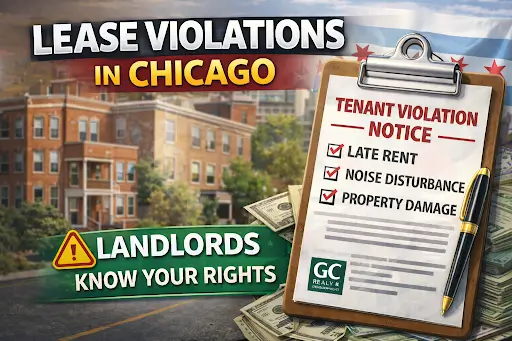
Managing a rental property in Chicago requires a clear understanding of what qualifies as a lease violation and how landlords are allowed to respond under the law. When a tenant signs a lease, they enter into a binding contract that outlines responsibilities, rules, and expectations for both parties. When those obligations are not met, violations can arise that put the tenancy and the property at risk.
For landlords renting property in Chicago, knowing how to identify, document, and address a lease violation is critical. Handling violations correctly helps protect your property, supports fair enforcement, and reduces the risk of costly legal action. Below, we break down what counts as a tenant lease violation in Chicago and what steps landlords should take to respond properly.
Key Takeaways
Lease violations occur when a tenant fails to follow the terms outlined in the lease agreement.
Proper documentation and written notice are essential before enforcing penalties or eviction.
Not all damage is chargeable, as normal wear and tear is excluded from violations.
Following the correct eviction process protects landlords from court costs and legal setbacks.
Understanding lease violations is just one piece of protecting your investment.
Download our free guide and learn how to screen tenants, structure leases, and prevent problems before they start.
👉 Download: The Chicago Tenant Screening Mastery Guide
Lease Agreements and Legal Obligations
A lease agreement is a written agreement between the landlord and tenant that defines lease terms, rent obligations, rules of tenancy, and conditions for termination. In Chicago, the lease serves as the primary document used by the court to determine whether a violation has occurred.
Lease violations can only be enforced if they are clearly stated in the lease or rental agreement. Verbal expectations that are not included in a signed contract are difficult to enforce. For this reason, landlords should ensure that their lease includes general provisions covering payment, utilities, maintenance responsibilities, occupancy limits, and behavior that impacts neighbors or safety.
Either the landlord or the tenant can reference the lease if a dispute arises, which is why clarity and consistency in writing are essential.
Common Types of Tenant Lease Violations
Non-Payment and Late Rent
One of the most common lease violations involves failure to pay rent. Non-payment, unpaid rent, or late rent beyond the grace period stated in the lease qualifies as a violation. In Chicago, landlords must send proper notice before moving forward with eviction.
If a tenant does not pay rent by the fifth day, landlords may issue a written notice demanding payment within a reasonable time. This notice must clearly state the amount owed, including any other charges allowed by the lease.
Unauthorized Occupants and Pets
Lease agreements often limit occupancy to more than one tenant or define who may reside in the tenant’s household. Allowing unauthorized occupants or unauthorized pets is considered a violation if it contradicts the lease terms.
Removing unauthorized pets should be handled carefully and documented thoroughly. Evidence such as photos, neighbor complaints, or inspection reports can support enforcement.
Pet policies directly impact rent, vacancy, and renewals.
We broke down the real numbers here:
👉 Why Saying “NO PETS” Costs Investors Thousands
Noise Complaints and Safety Issues
Repeated noise complaints from neighbors can qualify as a lease violation, especially when they interfere with safety or quiet enjoyment. Lease language should define acceptable behavior and grounds for enforcement.
Property Damage vs Normal Wear and Tear
Not all damage to a rental property qualifies as a violation. Normal wear and tear refers to expected deterioration that occurs through regular use, such as minor scuffs or aging fixtures. Property damage caused by negligence, abuse, or unauthorized alterations does qualify as a violation.
Damage to personal property, broken locks, or replacing the front door without permission may also violate the lease. These issues can impact possession, safety, and the landlord’s ability to maintain the premises.
When addressing damage, landlords should gather evidence such as photos, repair invoices, and inspection notes. Using a reliable maintenance service helps document repairs accurately and supports enforceable claims
Get more details about the difference between Normal Wear & Tear VS Tenant Damage.
Utility Violations and Maintenance Responsibilities
Lease agreements typically outline which utilities the tenant must pay for and maintain. Failure to keep utilities active or maintain the premises can be a violation if it threatens habitability or safety.
Tenants are also responsible for reporting repairs in a timely manner during normal business hours. Delayed reporting that causes further damage may be considered a failure to maintain the property according to the agreement.
Proper Notice and Documentation Requirements
Before taking legal action, landlords must send notices correctly. Notices may be hand-delivered, sent by certified mail, or mailed with return receipt requested. Every notice should include the address of the rental, the specific violation, and a deadline to comply or vacate.
Keeping copies of all notices, writing, and delivery confirmations is essential. Courts rely heavily on evidence, including documents, return receipts, and proof that the tenant received notice.
Landlords should also document interactions with the tenant, especially if more than one tenant is listed on the lease. Proper documentation protects both parties and supports enforcement.
5-Day or 30-Day Notice of Non-Payment? Know When You Need to Serve Each.
When Lease Violations Lead to Eviction
If a tenant fails to cure a violation, landlords may proceed with the eviction process. Eviction requires filing with the court and following strict timelines. Self-help eviction is illegal and can lead to severe penalties.
During eviction, landlords must present evidence, the signed lease, notices, and proof of violation. Court proceedings may involve court costs, hearings, and judgments regarding possession.
Understanding eviction law is critical, as mistakes can delay termination and increase expenses. Reviewing best practices related to renewals and enforcement can reduce risk by avoiding preventable errors in lease renewal decisions.
Security Deposits and Lease Violations
A tenant’s security deposit may only be used for unpaid rent or damage beyond normal wear. Landlords must not deduct for ordinary wear and tear or unproven claims. Deductions must be documented and itemized.
Improper handling of the tenant’s security deposit can expose landlords to legal action, even if a violation occurred. Accurate financial tracking through professional accounting services helps ensure compliance.
Understand why security deposits in Chicago can cost you thousands.
FAQs
What counts as a lease violation in Chicago?
A lease violation occurs when a tenant fails to follow the terms outlined in the signed lease agreement, such as non-payment, property damage, unauthorized pets, or repeated noise complaints.
Can a landlord evict immediately for a violation?
No. Landlords must provide proper written notice and allow the tenant a reasonable time to correct the violation before filing for eviction.
Is normal wear and tear considered a violation?
No. Normal wear and tear is expected and cannot be charged against the tenant or treated as a violation.
What happens if a tenant ignores notices?
If notices are ignored, the landlord may proceed with the eviction process through the court while presenting proper documentation and evidence.
Partner with GC Realty to lower your risk and buy back your time
We’ve shared a lot of information here on investing in real estate locally in Chicagoland. If you live outside the area, it may seem overwhelming for those wanting to invest in the Chicago market. But we really just look at it as a team sport.
Who’s on your investing team? Do you even have a team? GC Realty & Development, LLC has a dedicated team of professionals with decades of experience across all facets of real estate investment. We handle everything from brokerage to leasing and property management. Whether you hire us or not, we’re happy to provide our resources and expertise.
What gets me up in the morning and keeps me going 12 hours a day is the ability to add value to local area investors in Chicago and beyond! Those who connect with me often hear me say that our goal is to bring value to everyone we come in contact with.
We hope that in return, they will one day hire us for our tenant placement or property management services, refer us to someone they know, or leave a review about our services. We would clearly love all three; however, we’re happy whenever we get the opportunity to help!
Partner / Co-Host of Straight Up Chicago Investor Podcast