

 Vendor Portal

Author: Mark Ainely | Partner GC Realty & Development & Co-Host Straight Up Chicago Investor Podcast
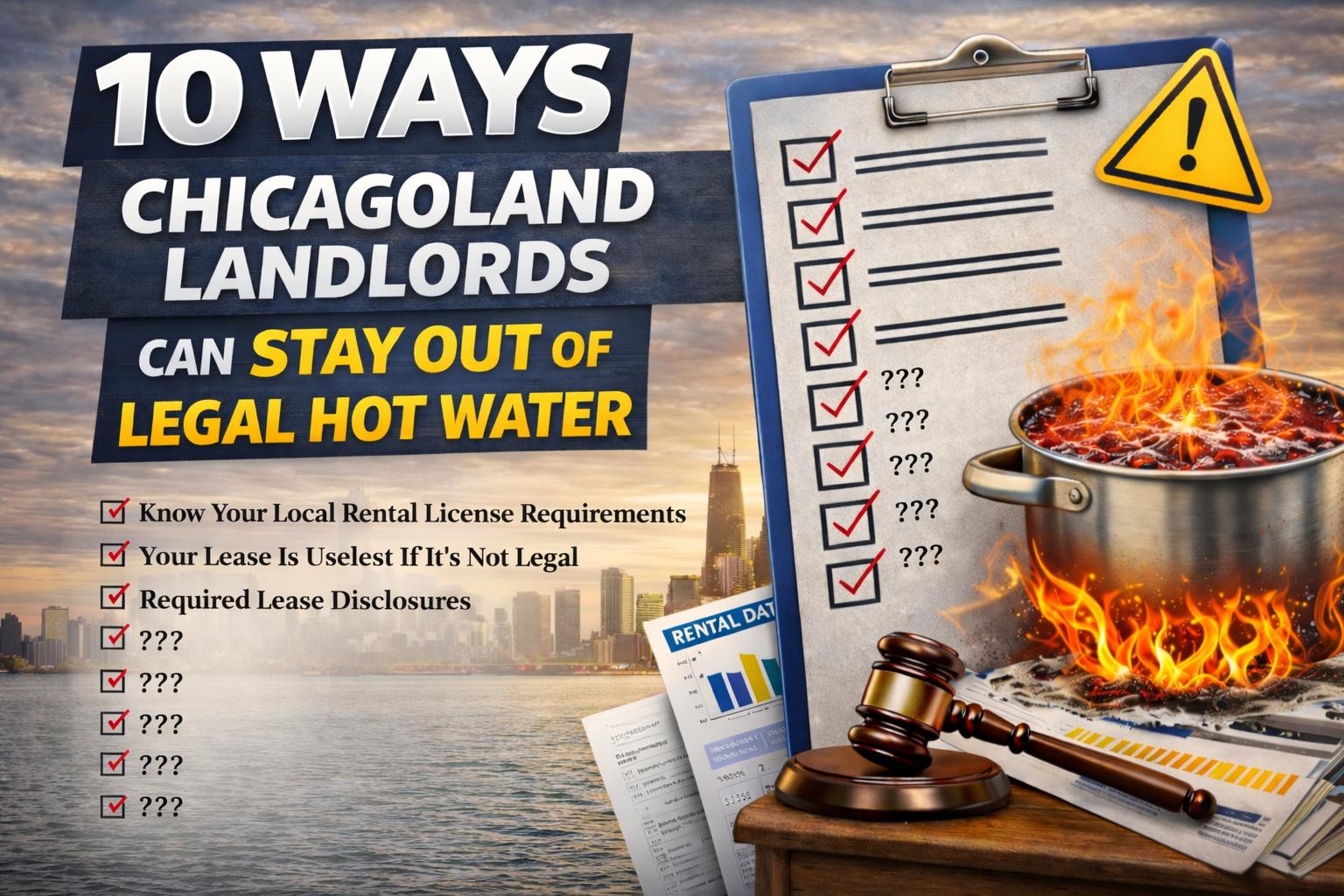
At GC Realty & Development, LLC, we’ve seen landlords run into avoidable headaches that the right knowledge and processes could have prevented. Owning rental property can be incredibly rewarding, but it also comes with its share of legal pitfalls. One misstep in leases, inspections, or evictions can cost you time, money, and stress. Ignorance is not a defence. We want to educate Chicagoland landlords on how to protect themselves. Below, we share 10 ways you can stay out of legal hot water.
Just having a rental property up to local codes and standards isn’t enough. In Chicagoland suburbs, you need a rental license or registration to rent your property legally. Some areas have laws on short-term vs. long-term rentals. If you’re asking yourself, “Who’s gonna know?”, stop right there. Skipping this step might seem minor, but it can delay evictions, prevent proper tenant placement, or even result in fines.
Stay Out of Hot Water: Start by checking with any Chicago suburbs or villages to understand local requirements. Then, make sure your property is compliant before you advertise it or sign a lease.
A handshake deal or a generic lease form you found online won’t hold up in court. Your lease needs to comply with Illinois state laws and local city ordinances. Without a proper lease, you can find yourself on the short end of the stick over rent nonpayments, security deposits, maintenance obligations, or tenant issues.
Don’t look for loopholes based on lease length, either. Landlords often think that if they do a month-to-month lease, they have fewer rules to follow and can get a tenant out faster. But even on a month-to-month lease, you still have to follow all the notice requirements, non-payment or eviction laws, and meet local and state laws.
Stay Out of Hot Water: A housing attorney well-versed in Chicago and Cook County laws can help you draft a lease that is tailored to your property and neighborhood laws. This protects you and your investment.
Once you have a lease agreement that’s been legally vetted by a housing attorney, you’ll need to ensure you provide additional materials to new tenants. You’re legally obligated to provide several disclosures at the time of lease signing. Failing to provide these disclosures can create legal liability and even void certain lease terms.
Depending on the local requirements, these disclosures may include:
Lead-based paint information
Flood hazard disclosures
Bed bug disclosure
Radon notices
Summary of Rights for Safer Homes Act
Chicago Crime Free Lease Addendum
Other city- or building-specific requirements
Stay Out of Hot Water: When in doubt, ask your housing attorney which disclosures apply to your property. Then, keep a signed copy for your records that verifies tenants received these disclosures.
Illinois has protections under the Human Rights Act that prevent discrimination against tenants based on their source of income, including housing vouchers and other lawful income sources. Your lease, rental ads, and screening process must treat all legally recognized income sources equally.
Landlords who ignore these rules or incorrectly risk costly fair housing complaints. These complaints can lead to litigation and reputational damage. Lease agreements, rental ads, and screening processes must all treat legally recognized income sources equally.
Landlords can get into trouble with the Illinois Human Rights Act and the Federal Fair Housing Act. Even if a landlord didn’t do anything wrong, they’re often considered guilty until they speak a lot of time and money proving otherwise.
Stay Out of Hot Water: Document your marketing and screening processes to demonstrate adherence to the Human Rights Act. Have your attorney review them regularly to ensure they meet the latest requirements.
Whether you have one rental property or a full portfolio, you’ll need to have a consistent, repeatable leasing process. Not only does it make placing tenants more efficient, but it also protects you in legal disputes because it demonstrates you treat all applicants equally. Skipping steps or making exceptions can lead to legal trouble or fair housing complaints
Every tenant should go through the same thorough leasing process, including:
Pre-screening questions
Applications
Income verification
Background and credit checks
Just Housing Amendment (Cook County Only)
Stay Out of Hot Water: Document your processes and have your attorney review them to ensure you comply with all applicable laws and ordinances. Keep a paper trail for every. single. applicant. You protect yourself this way in case you run into accusations of discrimination.
Once you have a signed lease agreement, you’ll need to arrange the move-in date. As a landlord, this shouldn’t be as simple as handing over keys.
Documenting your property’s condition at move-in and move-out is critical. Photos, videos, and signed inspection forms protect you if tenants dispute deductions from their security deposit. The stronger your documentation, the more easily you can resolve conflicts and minimize legal exposure. Think of inspections as an insurance policy for your property and deposits.
Stay Out of Hot Water: Idiot-proof the inspection process. It’s stupid easy to snap a bunch of photos and videos of your rental and store them digitally until the tenants move out. Then take the same photos and videos and match them up. Voila!
No one signs a lease with tenants expecting to have to deal with late fees or nonpayment. It still happens. But you can’t pound on a tenant’s door and try to shake them down the moment the rent is 5 days late.
Chicago and Cook County have separate specific limits on late fees and notice periods. Landlords who misapply these rules may inadvertently violate the law or find themselves in a lengthy (and expensive) legal process.
Stay Out of Hot Water: Work with an experienced housing attorney to ensure your lease clearly outlines late payment policies. If you find yourself needing to take action, always follow local statutes for notices and enforcement. As always, proper documentation prevents headaches down the line.
Evicting tenants is never easy. While it’s always better to try to work things out with nonpaying tenants, sometimes that’s just not possible. In these cases, landlords should plan for a potentially lengthy and expensive journey. They’ll also need to follow the prescribed actions in the prescribed order and to the letter, or risk making that journey even longer (and more expensive).
The eviction process in Illinois changed in 2026, altering notice periods, documentation requirements, and court procedures. Plus, eviction complaints may no longer name minors in any capacity. Landlords need to understand the latest requirements because missing a step could delay evictions or even result in legal penalties.
Stay Out of Hot Water: Familiarize yourself with these changes to protect your property and enforce lease terms efficiently. If you’re ever unsure… You guessed it- consult a legal professional.
As a self-managing landlord, you know that owning rental property is never actually a “passive investment.” In addition to rent collection, basic maintenance, and repairs, landlords need to fully understand the laws that apply to their portfolio.
Laws change frequently, especially in large urban areas like Chicago. Staying informed through professional organizations, blogs like ours, our Straight Up Chicago Investor podcast, or legal counsel ensures you’re operating within the law and safeguarding your investment.
Stay Out of Hot Water: Adopt an attitude of ongoing education to protect you and your investments. Being proactive today prevents costly mistakes tomorrow.
Even experienced landlords can run into situations that exceed their knowledge. If eviction, disputes, or code violations start to escalate, never ever guess on what your next action should be. Instead, rely on the expertise of your trusted housing attorney. They understand the letter and intent of laws and how to help you address issues quickly and with the least amount of financial burden.
It’s far cheaper and less stressful to get professional guidance than to try representing yourself in court, or risk fines for noncompliance. The best time to find a housing attorney is long before you need one for a dispute.
Stay Out of Hot Water: Form a relationship with a trusted housing attorney experienced in rental housing disputes. They can advise you on steps you can take early on to help address or mitigate issues down the line.
Your Partner in Chicagoland Property Management
For over 20 years, GC Realty & Development, LLC has helped thousands of property owners like you manage the day-to-day issues and when things get hairy. We work with the best Chicago and Cook County attorneys to protect our clients.
Whether you’re looking for advice on who to trust or want a partner to manage your property, give us a call at 630-587-7400 or sign up for a free rental analysis.