
 Vendor Portal

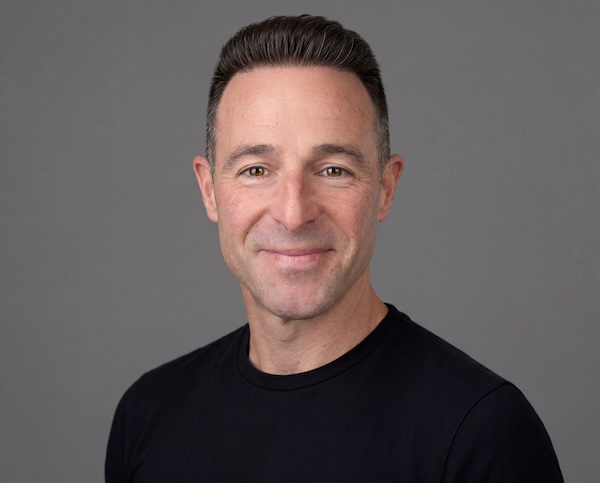
Author: Mark Ainely | Partner GC Realty & Development & Co-Host Straight Up Chicago Investor Podcast
Many investors still treat Chicago's South Side as harder to operate, or simply not worth the effort, compared with the North Side. Brian Mond sees a different picture.
According to Brian, the South Side is large, active, and still a place where investors who buy right and stay present can build a portfolio faster than they could in slower markets, such as the northwest suburbs. He also cautions that it is more expensive to run a building there, and that underwriting has to reflect that reality.
In this episode of the Straight Up Chicago Investor Podcast, Tom Shallcross and Mark Ainley welcome Brian Mond, a Chicago multifamily broker and investor, to talk about investing and brokering apartment buildings on the South Side. Brian shares how he got started, why he shifted from the northwest suburbs to the South Side, and how he groups South Side neighborhoods into three submarkets: Bronzeville, Kenwood, and Hyde Park; Washington Park, Woodlawn, and parts of South Shore; and Auburn Gresham and Englewood.
He also walks through what new investors should, and shouldn't, do when they start working with commercial brokers, how he has grown his own portfolio of 16 buildings, and what to consider before buying a mixed-use property.
Whether you're looking at a first South Side acquisition or adding mixed-use buildings to a Chicago portfolio, this episode offers a practical look at costs, neighborhoods, and the relationships that help deals get done.
Questions We Answer in This Episode
Q: What was Mark's housing provider tip in this episode?
A: Mark shares a recent example from a four-unit building that GC Realty manages. The owner is looking to sell, so the first step they took was asking the first-floor and second-floor tenants if they would be interested in buying. That path is moving quickly, with a lender and an attorney already involved. Mark says this can be much easier than waiting for a tenant to move out, cleaning up a unit, and then pursuing an FHA-style sale. In this case, the tenant would be able to buy without moving out, and the owner would not have to miss rent. Mark's advice: if you have a building of five units or less and you're thinking about selling, check with the tenants first. It can also be a cleaner transaction, with fewer selling commissions involved.
Q: How did Brian Mond get started in Chicago real estate?
A: Brian moved to the United States from Buenos Aires, Argentina, in 2001, when he was 17, after his parents relocated to Des Moines, Iowa, for his father's architecture work. He studied city planning at Iowa State University, graduating in 2007, then moved to Chicago for the real estate development program at Roosevelt University. He started out leasing apartments, mostly in Lincoln Park and Lake View, at Elan Leasing, a company that had him work directly with housing providers. One of those owners, Andy Goodman of The Wolcott Group, later introduced him to multifamily brokers, and Brian went on to Kiser Group.
Q: Was a formal real estate education worth it?
A: Brian thinks a master's degree is worth it. He says it widens your horizon, helps you meet people, and is something nobody can take away from you. It did not teach him exactly how to finance a building, but it did show him what lenders might look at. He also notes that nothing replaces being out on the street every day, and that when he started there were not podcasts like this one to learn from.
Q: How did Brian get his multifamily brokerage career off the ground?
A: He says the first six months as a multifamily broker are difficult, especially if you need deals in order to stay in the business. His first target area was the northwest suburbs, including Arlington Heights and Des Plaines, markets he describes as strong but slow, with properties that may not trade for many years. An owner gave him a shot on a large assignment that turned out to be about 200 units in Hoffman Estates, a combination of buildings he had initially thought was about 70 units. Lee Kiser helped drive the transaction, especially when credits and documents got complicated. Brian used that commission to buy a two-flat in Avondale for about $195,000 during a period when there were still many foreclosures. The building had room for a third non-conforming unit, so his plan was to live in that space and rent the other two. At the time, he says the two-bedrooms rented for $800 or $900. He says those units now rent for about $2,100, and that similar buildings are selling today for about $600,000 to $650,000.
Q: Why did Brian start focusing on Chicago's South Side?
A: After a few deals in the northwest suburbs, he was looking for more velocity. He says the South Side is "king" in that regard, because you do a lot of deals with a lot of different personalities. In his view, the buildings themselves are similar from market to market. The mechanicals and the walls are the same. Who lives in them, who owns them, and how you run them are different.
Q: How do South Side operating costs and buyers differ from the North Side?
A: Brian says it is a lot more expensive to run a building on the South Side. He estimates that turning a unit might cost about $2,500 on the North Side and about $7,000 on the South Side, because the units can get more beat up. He also says investors should underwrite South Side vacancy at 10% or 12%, not 5%, even if a lender might accept a lower number. He sees two tiers of buyers: out-of-state buyers chasing yield, and local operators. Out-of-state buyers, he says, have a much better chance if they team up with a local operator. Buying a single six-flat and trying to match an Excel sheet is going to be challenging. Mark adds a management comparison of a Lincoln Park two-flat and a South Shore two-flat, in which the South Shore building required about eight times as many management touches. He also notes that a higher management percentage on the South Side still may not make up the difference, because rents are lower. In his example, 6% of $4,000 in Lincoln Park is more money than 10% of $1,500 in South Shore.
Q: How have South Side neighborhoods and the buyer pool changed?
A: Brian says that around 2019, Fannie Mae and Freddie Mac financing started showing up more on the South Side, which changed who was buying. Before that, he says, transactions were mostly owner-operators. Back then, he recalls average cap rates around 10% on the South Side, while Fannie Mae and Freddie Mac financing allowed buyers to work with a 6.5% cap rate. That created more room to put construction money into deals and finish units to a higher standard, with granite countertops and stainless steel, which then raised tenant expectations. He divides the South Side into three submarkets: Bronzeville, Kenwood, and Hyde Park; Washington Park, Woodlawn, and parts of South Shore; and Auburn Gresham and Englewood. He says South Shore prices per unit can be about 30% higher than in Englewood, even though two-bedroom rents can be similar, and that Washington Park has seen an explosion of new construction and much stronger values. What surprised him most is how quickly investors can scale on the South Side compared with more stagnant markets, such as the northwest suburbs. He also believes that if you buy right, stay hands-on, and stay present, you can do well in any market, though turning around a difficult building can take 18 months to two years, not six months to a year.
Q: How should new investors work with commercial brokers?
A: Brian's first piece of advice is that it is okay to say "I don't know." You do not need to show up as the expert. A seasoned broker, he says, can tell right away. Have your financing path figured out, even if it is not exact, including whether you plan to use private or bridge lending and then permanent financing later. If you disagree with someone, you do not need to be combative. Lean on the broker for information and advice, go to lunch, and stay in front of them. It may take two or three years before you do a deal together, and he says that is okay. He also believes in tenant retention rather than emptying a building to start over, because you need the cash flow through the transition. He has bought 16 buildings, with another under contract, and says he has used a broker on every purchase. Even when he sold buildings in Little Village, he used a broker who was not himself, to put a little distance between himself and the transaction.
Q: Where is Brian's portfolio, and why does he like mixed-use buildings?
A: The core of his buildings is on the northwest side of Chicago, in Belmont Cragin, Avondale, and Hermosa, with a lot of them in Hermosa, and many of them mixed-use. He likes providing apartments that are not super expensive, with local retail on the ground floor, which he ties to Chicago's walkability. Speaking Spanish has also shaped where he buys, because it changes the conversation when he knocks on a tenant's door. He also describes a 17-unit mixed-use condo conversion at 2700 North Laramie, which meant buying from 17 individual owners under one roof. He says Chicago requires 85% agreement to sell a condo building. The deal took about a year and a half and included serious hiccups, including an owner who passed away while they were under contract and another owner, with two units, who did not want to sell. Brian says he walked into about 30% equity because he already knew he could deconvert retail space into apartments, something he had seen done on the South Side. Mark adds that under Chicago's ADU program, B and C zoning now allows apartments on the first floor without aldermanic approval, though owners still need to keep a portion of the space as storefront, which is one reason he says investors should be looking at mixed-use more often.
Q: What should investors know before buying a mixed-use building?
A: Brian says it depends heavily on the area and on who your neighbors are, both landlords and tenants. If it takes two or three months to rent an apartment, it might take a year and a half or two years to lease a retail space, but that retail tenant may stay for 5 to 10 years. Some of his retail tenants have been in place for 16 or 18 years. He recommends leaning more on the apartment income in your analysis, not because retail income should be ignored, but because you need to know whether you can hold the deal if a retail space sits vacant for a year. The horizon should not be a year or 18 months. When a retail space comes back, he prefers bringing it to a vanilla box rather than leaving it gutted to the studs, unless a tenant is already lined up, because not every prospect can see beyond a raw space. On lease structure, the conversation favors keeping terms simpler for mom-and-pop retail tenants, such as a modified gross lease, rather than a triple-net structure that can surprise a tenant with a large year-end bill.
Q: Is Brian still buying, and what is his outlook on Chicago?
A: Yes. He is under contract on another building and still bullish on areas such as Hermosa and Belmont Cragin. He calls Chicago a "steady Eddie" market. In his view, many institutional investors still do not treat Chicago as a viable market, which leaves room for local buyers. That also means the market does not skyrocket in the same way, and it does not crash in the same way. He thinks you can still build a strong portfolio here in a relatively short time, in a city where everything is 15 or 20 minutes away, without competing against buyers who are using a very different kind of math.
Q: What is Brian's advice for someone who has not bought a first property yet?
A: Do not expect it to be a passive investment if you are planning to continue to grow. He says his competitive advantage is being a broker, not because brokers get the deals first, but because the work lets him talk with many building owners and learn how they run their businesses. He also points listeners toward local networking groups, including the South Side Builders Association, the Neighborhood Building Owner's Alliance (NBOA), Chicago REIA, and the Chicago Multifamily Club. To reach him, he says to Google "Brian Mond," and that he is on Instagram and LinkedIn. He recommends the book Buy Back Your Time by Dan Martell.
Show Notes and Timestamps
00:00 Tom Shallcross and Mark Ainley open the episode.
00:15 Housing provider tip: if you are selling a building of five units or less, check with the tenants first.
01:31 Tom introduces guest Brian Mond, a Chicago investor and broker.
02:07 Brian shares how he moved from Buenos Aires to Des Moines in 2001, then to Chicago.
05:36 Roosevelt University, his master's in real estate, and early leasing work in Lincoln Park and Lake View.
07:30 Andy Goodman of The Wolcott Group introduces him to multifamily brokers, and he joins Kiser Group.
08:32 Was a formal real estate education worth it?
10:47 The hard first years in brokerage, and a first large listing of about 200 units in Hoffman Estates.
13:27 Brian uses that commission to buy a two-flat in Avondale for about $195,000.
18:38 Why he started looking at the South Side: more deal velocity than the northwest suburbs.
19:55 Higher South Side operating costs, 10% to 12% vacancy underwriting, and local versus out-of-state buyers.
22:38 Mark compares management intensity on a Lincoln Park two-flat versus a South Shore two-flat.
24:32 How Fannie Mae and Freddie Mac financing, and higher-end unit finishes, changed the South Side buyer pool around 2019.
26:16 Three South Side submarkets, and why values and scale can look different from Englewood to Hyde Park.
32:16 Brian's move from Kiser Group to Essex Realty Group, where he focused on the South Side from 2016 to 2024.
34:15 A 17-unit mixed-use condo conversion at 2700 North Laramie, and walking into about 30% equity.
36:22 Mark's note on ADU rules and first-floor apartments in B and C zoning.
36:46 How new investors should work with commercial brokers, including financing, tone, and tenant retention.
42:45 Brian has bought 16 buildings, has another under contract, and has used a broker on every purchase.
43:44 Portfolio concentration in Belmont Cragin, Avondale, and Hermosa, with many mixed-use buildings.
46:30 Mixed-use and retail advice: longer lease-up, longer tenant stays, and underwriting that can survive vacancy.
52:33 Keeping retail leases simpler for mom-and-pop tenants.
54:47 Brian's outlook on Chicago, and why he is still buying.
57:54 Rapid-fire close: competitive advantage, advice for new investors, sailing, Buy Back Your Time, and local networking groups.
01:02:04 How to find Brian Mond on Google, Instagram, and LinkedIn.
01:02:32 Chicago fact close on Columbus Park, sponsored by One Digital.
Key Takeaways for Chicago Landlords and Investors
The South Side can offer more deal velocity and a faster path to scale than slower markets, but only if you buy right and stay present.
It is often more expensive to operate a South Side building. Budget for higher unit-turn costs and underwrite vacancy more conservatively than you might on the North Side.
Out-of-state buyers chasing yield tend to do better when they partner with a local operator, rather than trying to run a single building from a spreadsheet.
South Side neighborhoods are not one market. Bronzeville, Kenwood, and Hyde Park, the Washington Park, Woodlawn, and South Shore area, and Auburn Gresham and Englewood can have very different values even when rents look similar.
Financing changes have raised finish levels and tenant expectations in some South Side buildings, so older vintage units may be harder to keep competitive.
When you move from residential brokers to commercial brokers, it is better to admit what you do not know, have a financing path in place, and stay in front of the broker over time.
Tenant retention often protects cash flow better than emptying a building to start over.
Mixed-use can work in walkable Chicago neighborhoods, but retail spaces can take much longer to lease than apartments. Make sure the deal still works if a storefront is vacant for a year.
For mom-and-pop retail tenants, simpler lease structures can prevent year-end billing surprises that cause a deal, or a tenancy, to fall apart.
Chicago's relatively steady market, and the fact that many large institutions still stay on the sidelines, can leave room for local investors who are willing to do the work.
If you plan to keep growing, do not expect the investment to be passive. Local networking groups and experienced brokers can shorten the learning curve.
If you are selling a small building of five units or less, ask current tenants whether they want to buy before you go through a typical vacancy and listing process.
Guest info
Guest Name: Brian Mond
Guest Company: Essex Realty Group
Guest Link: https://essexrealtygroup.com/
Because finding good tenants and property management shouldn’t feel like online dating.
Dear Investor,
If you are an investor in either the city or suburbs of Chicago, I would love to speak with you about how we can help you on your real estate journey. At GC Realty & Development LLC, we help hundreds of Chicagoland real estate owners and brokers each year manage their assets with both full service property management and tenant placement services.
We understand that every investor’s goals are unique, and we love learning about each client’s individual needs. If there is an opportunity to help you buy back your time by managing your rental property or finding quality tenants, please check us out.
Best Investing,
Founder, Partner, Podcast Co-Host, and Investor