
 Vendor Portal

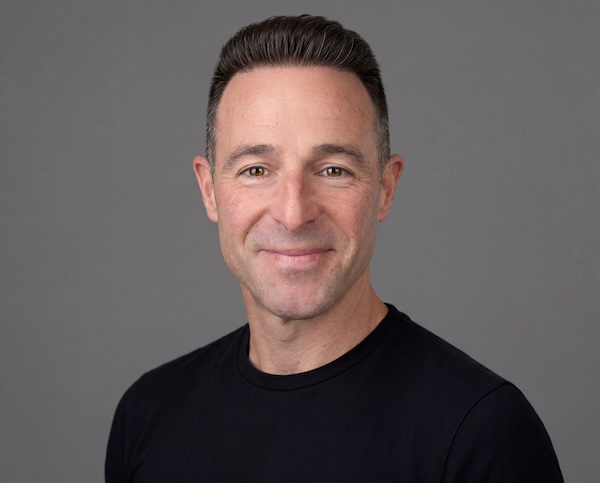
Author: Mark Ainley | Partner GC Realty & Development & Co-Host Straight Up Chicago Investor Podcast
Title insurance can sound like a checkbox: go to a title company, they will take care of it, and you close. In practice, Chicago investors face a lot of decisions about what is actually covered, what can still show up after you close, and how to keep a closing wire from disappearing for good.
In this episode of the Straight Up Chicago Investor Podcast, Tom Shallcross and Mark Ainley welcome Ania Pulit and Grace Chakos of the title company Land Trust, the first title company to officially appear on the show. The hosts said they were almost at episode 500, and they came in with a long list of questions.
The guests walk through what title insurance actually protects, how an owner's policy differs from a lender's policy, and the common mistakes they see on distressed deals, from skipped walkthroughs and unpaid taxes to mechanic's liens, water meters, assignments, and tax deeds. They also spend a large part of the conversation on wire fraud, AI voice cloning, seller impersonation on vacant land, and the tools Land Trust uses, including Closing Lock and an ALTA 49 endorsement.
Whether you are a Chicago housing provider buying or selling a building, taking on a distressed property, or just trying to get through closing without a surprise, this episode is a practical look at how to work with the right title team and protect yourself from fraud. This recap is for general information only and is not legal, insurance, or tax advice. Review your own deal with an attorney and a title professional who represent you.
Questions We Answer in This Episode
Q: What was the housing provider tip in this episode?
A: One of the hosts focused on closing-day wire fraud. When the wire instructions arrive, do not call the phone number printed on that message. Look up the title company yourself, call a number you found independently, and confirm the instructions with someone live. The host said that if you send $40,000, $100,000, or $200,000 and the wire is fraudulent, you do not get that money back. Another host added that, for smaller amounts, a cashier's check may still be an option under $50,000, but asked listeners to confirm that with their title company.
Q: What is title insurance, and who pays for the owner's and lender's policies?
A: One of the guests described title insurance as coverage for events that already happened on the property, unlike homeowners insurance, which covers things that happen after you move in. The title company's job, as they explained it, is to find what occurred before closing so old financial obligations do not become the new owner's problem. Their example: you have been in the property for five days, and someone knocks saying they did landscaping five months earlier and wants $20,000 from the new owner. A guest said the owner's policy is paid for by the seller and is usually the larger fee, because the seller is insuring the buyer that the home is free and clear of liens. If there is a mortgage, the lender also requires a lender's policy, which insures that the lender is in first-lien position if it later needs to foreclose.
Q: How do distressed properties and "subject to" closings work, and why does a walkthrough still matter?
A: A host asked how deals come together when a building is in demolition court or under a city injunction. A guest said that is why Land Trust started an investor division, because their team works distressed files every day. Many investor buyers, they said, take a property "subject to" items such as building-code violations so the closing is not held up. Other buyers insist the seller clear everything first, which can mean the seller's attorney has to go to court. Those leftover items become exceptions to the policy. The title company will help work on them, but will not take on the liability of a live demolition case. The same guest described a Chicago investor who agreed to buy a property for $100,000, skipped the walkthrough the day before closing, and arrived the next day to find the building had been demolished. They had bought $100,000 of vacant land that the guest said was probably worth about $20,000.
Q: Do you still need a real estate attorney in Chicago, even if a seller does not want to hire one?
A: Yes, according to the guests. They can connect a client with an attorney, but going into court to get a case dismissed has to be done by a real estate attorney. They said an attorney is necessary in the Chicagoland market to prepare deeds, handle the figures, and protect the party they represent. Some sellers, especially on direct-to-seller deals, do not want to spend the money. A host mentioned sellers who resist spending about $800. The guests said a solid attorney can often be found in the $600 to $800 range, and that the seller still pays a deed fee of a few hundred dollars even without one. Land Trust may order the water and the survey as a courtesy, but they still recommend an attorney.
Q: What common mistakes do the guests see investors make before closing?
A: One example was a woman planning to sell a property quickly for $20,000 who had not run the property first. Taxes from 2014 forward were unpaid, almost $100,000 worth. The guests said a title search is public record, they will often run one as a courtesy or teach an investor how to do it, and Chicago taxes can be especially complicated because of a 20-year history and tax buyers. A host underscored the difference: a title search is not title insurance. It is a first look at the problems you may be walking into. A FOIA request can help, but it has to be specific. In one example, a buyer asked a municipality for all the liens, bought the property, and then found about $12,000 more when she went to hook up the water, including unpaid debts such as weed-cutting bills that had not been filed as public liens. Those requests are often free and usually take about a week, and the guests said they can be harder to run correctly in the City of Chicago. A guest also said taxes are the number one claim for any title company, including cases where a tax search misses a bill, in their example $13,000, after closing.
Q: What are partial-claim mortgages, and why do they surprise buyers?
A: A guest warned that a distressed property may have gone through loan modifications that added partial-claim mortgages. Those, she said, are not forgiven, unlike another type of government-related loan she described as able to be forgiven after five years, using a $7,500 credit as an example. Partial claims attach on the back of the main mortgage, so a buyer who thinks they are paying off a $100,000 mortgage may have several additional claims to pay as well. A host said he had not heard the term before. The guests stressed that title work is meant to surface issues like this, and that even regular transactions can have surprises, such as divorces, old inheritances, or unpaid taxes.
Q: Why are mechanic's liens such a big issue on Illinois flips and renovations?
A: The guests said mechanic's-lien claims are a huge one. A seller may have renovated a kitchen, argued with a contractor, and not paid in full for the cabinets. After closing, the contractor can file a lien, sometimes in the gap after closing, and the title company may be responsible. A host added that sellers sometimes do not even know a lien is out there. In Illinois, the guests said, mechanic's liens have priority over mortgages, unlike Wisconsin, and subcontractors can have lien rights too. On a smaller job they might accept a lighter ALTA statement, using a $40,000 flip as an example. On a $200,000 renovation, they want to know whether the contractor and subcontractors were paid. A host also noted that, compared with even five years ago, sales now often require full lien waivers and a sworn statement.
Q: How can water, meters, and escrow holdbacks stall a Chicago closing?
A: As soon as an investor goes under contract, Land Trust likes to order the water search right away, rather than waiting until the closing is scheduled. A missing water meter, they said, can take a long time for the city to install. If that work does not come in on time and the buyer has a rate lock, the parties may need an escrow holdback. There is no standard number: a guest said it can be a $100 bill or a $50,000 bill, and that they often hold back a figure such as $15,000 for water or zoning until the issue is cleared. That delay matters if the buyer wants to flip the property in a month or two, especially if the seller has already moved. Land Trust tries to connect the water department directly with the seller or the seller's attorney. They also mentioned related seller-side work they see often, such as affidavits of heirship when heirs are hard to find.
Q: What is the difference between an assignment, a novation, and a double escrow?
A: The guests said most wholesalers use assignments, where the contract is assigned to the end buyer and an assignment fee shows on the settlement statement. A novation uses a new contract, still deeding from A to C, with the wholesaler remaining in the mix. A double escrow, or double close, is A to B and then B to C, with two deeds, usually on the same day. One guest said she believes Harvey will not allow assignment contracts and instead wants a new contract. Some municipalities, and some title companies, also will not do double escrows. On transfer stamps, they noted that in the City of Chicago both the buyer and the seller pay, and Land Trust can arrange to pick them up, including through pre-signs so a seller can move before the buyer finishes. They said this is the kind of investor work many title companies shy away from, which is why they built a dedicated division. They work with new investors, wholesalers, and investors doing as many as 300 deals a year, and said investors are about 30% of the market.
Q: What is a tax deed, and will title insurance cover it?
A: A guest walked through the basic path as she described it, not as a cited statute: unpaid taxes can go to tax sale after about a year or two, a tax buyer pays the missed year and gets rights that sit ahead of the mortgage, and after a redemption period she described as two and a half years, that buyer can petition for a tax deed. If everyone was properly served and the judge signs off, the tax buyer can end up owning the property, and other interests can be wiped out. IRS liens, she said, are an exception: they are super liens and are not something you just waive off. Land Trust will review the case and, with an underwriter that allows it, will insure the end buyer purchasing from the tax buyer, often with full coverage, though it can cost more. They do not insure the tax buyer simply taking the property. If someone keeps a tax-deed property and rehabs it, she said there is typically no title policy in that window until a later sale.
Q: How should buyers and sellers protect themselves from wire fraud?
A: Land Trust uses a program called Closing Lock and absorbs that cost rather than passing it on to buyers or sellers. They tell people not to email wire instructions, because email accounts get compromised. A guest described seeing fraud attempts monthly, including a spoof that appeared inside an existing attorney email thread. Their protocol is that wire instructions do not simply change, every payoff is checked in Closing Lock, and their escrow team calls the lender to verify a payoff that does not check out. Buyer-side wires also go through that encrypted portal. The most striking recent example, which she said was in the news, involved a couple buying a condo who needed $66,000 to close. They knew not to trust an email with new wire instructions, then got a phone call in their loan officer's cloned voice "verifying" those instructions, and sent the money. The loan officer had never called. A guest said a voice can be copied with a low-cost program after a short audio sample, and cited FBI figures she said are on the FBI's website, including about 2,700 cybercrime calls a day. The takeaway: work with a title company you trust, use a family passcode for money requests, and do not treat a voice on the phone as proof.
Q: What is seller impersonation fraud, and why is vacant land a target?
A: A guest said vacant, unencumbered land is the easiest target because the owner may not walk the property, there is often no mortgage payoff to verify, and a fraudster can contact an agent with an out-of-state story and push a fast cash close. A host said a version of this had happened to him on a vacant, tax-delinquent property. Land Trust offers seller verification for realtor clients at no charge. One guest said they stopped nine attempts just last year, and they will not close on vacant land unless the seller goes through Closing Lock, a process they tied to $5 million of protection. The seller has to log in, scan an ID, take a selfie, and the system checks the ID, the photo, and location. They have also seen the pattern on vacation homes and even a neighbor trying to sell a nearby property. Their advice: do not let the other side pick their own notary. They prefer remote online notarization with knowledge-based authentication questions, or a vetted notary network.
Q: What is an ALTA 49 endorsement, and why are the guests talking about it now?
A: Traditional title insurance, they said, covers you through the date of recording. It does not help if, a year later, a fake mortgage or a forged deed hits the property. Land Trust offers an ALTA 49 endorsement as part of the closing, a newer product they said they started earlier this year. It costs $250, covers you for as long as you own the property, and is their answer to services that charge about $20 a month to monitor a property. If a false deed or mortgage appears, they said they will go to court, pursue a quiet title, and work to get the interest removed. A host noted that this is the rare title product that covers you while you still live in the house, for events after you buy.
Q: If you buy a property in cash and then put money into the rehab, what is actually covered?
A: A host asked whether a cash buyer who purchases a property for $100,000 and plans $100,000 of rehab should put that rehab figure on the settlement statement so it is covered. A guest said that if a lender is making a $150,000 mortgage on a $100,000 purchase, the lender's policy can cover up to $150,000. On a pure cash purchase, coverage is typically only up to the $100,000 purchase price. If Land Trust is doing construction draws, they do date-downs and coverage can increase as draws are made. A private lender who records a mortgage will usually want to be insured as well. The guest said they could likely discuss covering a cash buyer up to a higher amount, but the standard cash policy follows the purchase price. They also prefer to show insurance and other covered items on the settlement statement, rather than paying outside of closing.
Q: How can buyers and sellers help a closing finish in under 90 minutes?
A: The guests said they do plenty of closings in 90 minutes when the file is ready. Many sellers now pre-sign, and cash deals can often be done remotely, with the buyer signing a couple of notarized documents and sending funds through Closing Lock. On financed deals, the pace usually depends on the lender issuing a clear to close, or CTC. Their advice: schedule the closing after you are clear to close, not before. Avoid Fridays and the 30th of the month when possible, because those days are busiest for lenders. Midweek, or Monday through Thursday, is often faster. A host added that a dry close on a Monday is a painful outcome, because a Friday session can leave you paying construction interest over the weekend before you actually take title. Time zones matter too. A host said he no longer schedules 9:00 a.m. closings when the loan is being serviced on the West Coast.
Show Notes and Timestamps
Official episode page: PENDING
YouTube: PENDING
00:04 Opening of the Straight Up Chicago Investor episode (the provided transcript starts mid-intro)
00:13 The hosts note that both guests speak another language, including Italian, a first for the show
00:33 Studio update: the basement renovation is expected to be done by November 7 for a CIC event
01:24 The hosts tee up title decisions and why so many people never ask what they are paying for
01:57 Fraud is rampant, and the hosts say you need a title company that can still get investor deals done
02:40 Housing provider tip: confirm wire instructions by calling a number you looked up yourself
03:47 A host discusses cashier's checks on smaller closings, and why some investors trusted them more than wires
04:22 Tom and Mark welcome first-time guests Ania Pulit and Grace Chakos of Land Trust, the first title company officially on the show
04:47 What title insurance is, and how it differs from homeowners insurance
07:12 Owner's policy versus lender's policy, and first-lien position
08:24 Distressed property, demolition court, "subject to" exceptions, and Land Trust's investor division
10:20 The skipped-walkthrough story: a $100,000 Chicago building demolished before the buyer arrived
11:11 Why a real estate attorney still matters, even when a seller does not want to hire one
13:48 Common investor mistakes, unpaid taxes, and the difference between a title search and title insurance
15:50 FOIA requests, unrecorded debts, and a $12,000 water surprise
17:33 Why Land Trust built an investor unit, and who that client is
20:53 Partial-claim mortgages and other issues that can hide behind a "normal" payoff
23:09 Taxes as the number one title claim, plus mechanic's liens and lien waivers
26:16 Water searches, missing meters, and escrow holdbacks
28:14 Probate, affidavits of heirship, and sellers who just want out
28:46 Municipal rules, Harvey and assignments, and transfer stamps
30:40 Assignments, novations, and double escrows
33:58 What a tax deed is, redemption, and when title insurance will cover the end buyer
38:37 Wire fraud, spoofed email threads, and Closing Lock
45:40 The $66,000 deepfake voice-cloning story, and FBI figures discussed on the air
49:09 Seller impersonation, vacant land, and seller verification
55:26 The future of closings, and the ALTA 49 endorsement
57:41 How coverage works on cash purchases versus construction draws
61:23 How to help a closing finish in under 90 minutes, including CTC, Fridays, and time zones
65:02 Rapid fire: competitive advantage, first-property advice, and building a team
68:03 Chicago Fact for a merch-store listener, sponsored by One Digital: which of Chicago's 77 community areas has the smallest population
70:02 Close, with a reminder to visit Build Your Team at StraightUpChicagoInvestor.com
Key Takeaways for Chicago Landlords and Investors
Title insurance covers problems that already happened on the property before you took title. It is not the same as homeowners insurance, and it is not the same as a title search.
Confirm wire instructions by calling a number you looked up yourself, not the number on the email or text. If a fraudulent wire goes out, that money is often gone.
Do the walkthrough. The guests described a Chicago buyer who skipped it and closed on a building that had already been demolished.
Run the property before you make or accept a cheap offer. Unpaid taxes, water bills, and unrecorded city debts can dwarf a bargain price. A FOIA request helps, but only if you ask the right questions.
On distressed or modified loans, ask whether partial-claim mortgages or other add-on debt sits behind the main payoff.
In Illinois, mechanic's liens can have priority over mortgages, and subcontractors may have lien rights too. Budget time for lien waivers, especially on larger renovations.
Order the Chicago water search early. A missing meter or a large water bill can force an escrow holdback and delay a flip timeline.
Assignments, novations, and double closes are not treated the same in every municipality, and not every title company will handle them. Harvey, as the guests described it, is one place that may require a new contract instead of an assignment.
A tax deed can wipe out other interests if the process was done correctly, but IRS liens are a notable exception, and not every underwriter will fully insure that purchase.
Do not email wire instructions. Land Trust uses Closing Lock, verifies payoffs, and will not close vacant land unless the seller goes through that identity process.
A convincing phone call is no longer proof. The guests described a deepfake of a loan officer's voice that led a couple to wire $66,000 they could not recover.
Traditional title insurance stops at recording. The ALTA 49 endorsement they described is a newer, one-time add-on meant to help if a fake deed or mortgage hits the property after you own it.
Coverage on a cash purchase usually follows the purchase price. If you later put your own rehab money in, that extra cash is not automatically insured unless a lender or another insured interest is in the deal, or you make a specific coverage arrangement.
Schedule closing after you have a clear to close, and avoid Fridays and month-end if you want the file to move faster.
This is general information from a podcast conversation, not legal, insurance, or tax advice. Have your own attorney and title professional review the deal in front of you.
Guest info
Mark Ainley
Founder and Partner, GC Realty & Development
Podcast Co-Host, Straight Up Chicago Investor
Guest Name: Ania Pulit and Grace Chakos
Guest Company: Land Trust
Guest Link: Pending. No firm URL was given in the transcript. Confirm the spelling of both names and a guest link from the YouTube description or official episode page once those are available.
Because finding good tenants and property management shouldn't feel like online dating.
Dear Investor,
If you are an investor in either the city or suburbs of Chicago, I would love to speak with you about how we can help you on your real estate journey. At GC Realty & Development LLC, we help hundreds of Chicagoland real estate owners and brokers each year manage their assets with both full service property management and tenant placement services.
We understand that every investor’s goals are unique, and we love learning about each client's individual needs. If there is an opportunity to help you buy back your time by managing your rental property or finding quality tenants, please check us out.
Best Investing,

Founder, Partner, Podcast Co-Host, and Investor