

 Vendor Portal

Author: Mark Ainely | Partner GC Realty & Development & Co-Host Straight Up Chicago Investor Podcast
With everything going on in Chicago housing provider news these days, the phrase "Chicago rights ordinance" gets tossed around constantly. But the real meaning of that name points to the 2013 Tenants' Rights Ordinance, which is a completely different animal from the RLTO and from any of the proposals being fought over right now in City Hall.
I've been operating in this market since 2003, and I still watch people confuse these three things all the time. So let me clear it up and, more importantly, show you where the 2013 ordinance can reach out and touch your next deal.
Key Takeaways
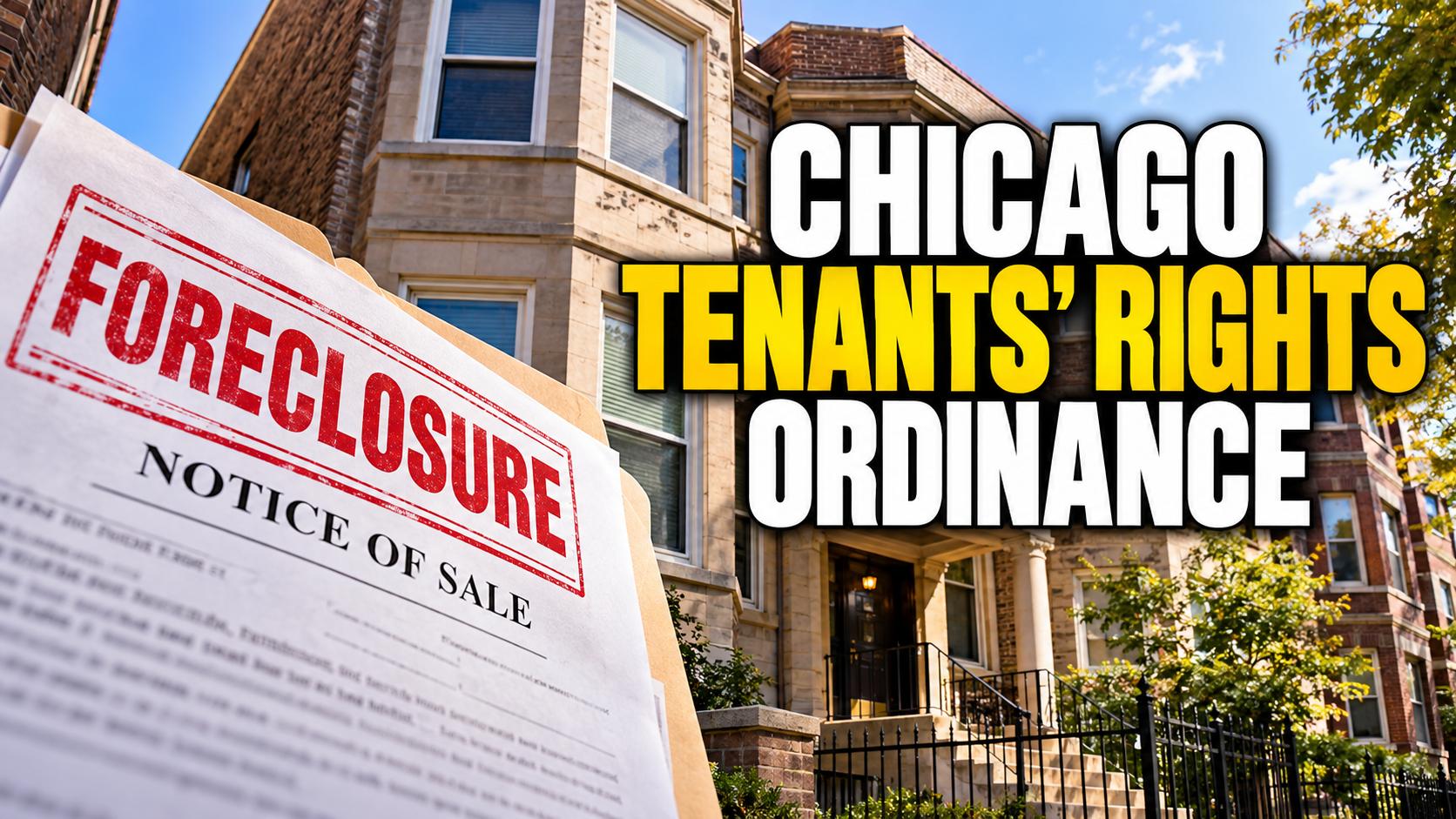
The 2013 Tenants' Rights Ordinance is officially called the Protecting Tenants in Foreclosed Rental Property Ordinance, better known as the Keep Chicago Renting Ordinance, or KCRO.
It is not the RLTO and it is not any of the renter proposals in the news right now. It only applies when a rental building changes hands through foreclosure.
It was passed in 2013 as a direct response to the wave of foreclosures coming out of the Great Recession.
The new owner has to either offer a qualified tenant a renewal capped at a 2 percent increase, or pay that tenant a one time relocation fee of 10,600 dollars.
If you buy at a judicial sale and the building is occupied, this rule applies to you once you take possession.
An occupied foreclosure is not automatically a bad deal. You just have to price this expense in before you bid.
Why It Showed Up When It Did
You have to look at the calendar to understand this one. It passed in 2013, right on the tail end of the Great Recession. From roughly 2008 through the early 2010s, Chicago and other big cities were buried in foreclosures. Buildings full of paying, in place tenants were getting foreclosed on because the owner defaulted, and those renters, who had done nothing wrong and were current on their rent, would suddenly find themselves getting pushed out when a bank took the building.
Banks wanted the properties empty so they could sell them faster, so occupied buildings were being emptied out and left vacant. That created two problems the city was watching happen in real time. Families losing their homes through no fault of their own, and a wave of newly vacant buildings sitting empty, deteriorating, and dragging down entire blocks.
The 2013 ordinance was the city's answer to both. Give the tenant a path to stay or a real financial cushion to move, and give the new owner a strong reason to keep the building occupied instead of empty.
What the 2013 Ordinance Actually Is
What it is officially called. The Protecting Tenants in Foreclosed Rental Property Ordinance, better known as the Keep Chicago Renting Ordinance, or KCRO. The City Council passed it on June 5, 2013, and it took effect September 24, 2013. It lives in the Chicago Municipal Code at Chapter 5 14.
What it is actually about. It has nothing to do with your everyday lease relationship. It only kicks in when a rental building changes hands through foreclosure. Its stated purpose is to keep occupied buildings from going vacant after a foreclosure and to keep renters in their homes during that transition.
Who it protects. Qualified tenants living in a foreclosed rental property. That means people with a bona fide rental agreement in place at the time the property is foreclosed, not the former owner or their family.
Who it binds. The new owner, meaning the bank, lender, or whoever takes the property at the foreclosure sale. This is the key distinction. The RLTO binds regular landlords. The KCRO binds the party that acquires a building out of foreclosure.
The core requirement, Section 5 14 050. The new owner has to do one of two things for each qualified tenant. Either offer a lease renewal or extension with a rent increase capped at 2 percent, or pay that tenant a one time relocation fee of 10,600 dollars. Under the current version, the choice sits with the tenant. A tenant can turn down the renewal offer and still collect the 10,600 dollars, and if they choose to leave, the owner has to hand over that money within seven days of the unit being vacated.
The notice requirements, Section 5 14 040. The new owner has to serve tenants with a written notice of their rights, and there are strict timing rules. Notice has to go out within a set window after taking ownership, and any additional tenant discovered later has to be notified within seven days of learning who they are. The ordinance also requires the notice in multiple languages.
Registration. The ordinance requires the owner of a foreclosed rental property to register it with the city, which is how the city tracks compliance.
Where This Hits Chicago Investors Today
This is not just history. If you buy at a judicial sale, also known as buying off the courthouse steps, this ordinance can land squarely on you. First thing to understand is that you do not get possession the moment you win the bid. There is a process before the property is actually yours to take over, and if that building is occupied when you finally get possession, the KCRO applies to you as the new owner.
That means the investor who thought they were picking up a clean building for the auction price is now looking at a choice for every qualified tenant inside. Offer a renewal capped at a 2 percent increase, or write a 10,600 dollar relocation check per tenant. On a building with a few occupied units, that exposure adds up fast and it comes right off whatever margin you thought you had on the deal.
The good news is you can see this coming before you ever raise your hand to bid. Drive by the property. Walk around it if you can. It is usually pretty easy to tell whether people are actually living there. Lights, cars, curtains, garbage cans out, general signs of life. If the building looks occupied, you go in assuming the KCRO is part of the deal and you bid accordingly.
And here is the important part. An occupied foreclosure is not automatically a bad deal. You just have to build this extra expense into your numbers, and it is a big one. Once you account for the potential 10,600 dollars per tenant, the renewal terms, and the time before you actually get possession, plenty of these deals still pencil out. The investors who get burned are the ones who never factored it in, not the ones who knew it was coming and priced it accordingly.
Frequently Asked Questions
Is the 2013 Tenants' Rights Ordinance the same as the RLTO?
No. The RLTO governs the everyday relationship between regular landlords and their tenants. The 2013 ordinance, the KCRO, only applies when a rental building changes ownership through foreclosure. Two different laws for two different situations.
Does this apply to every rental property in Chicago?
No. It applies specifically to foreclosed rental properties inside the city of Chicago. If there was no foreclosure, the KCRO is not in play.
Who has to pay the relocation fee?
The new owner, which is usually the bank, lender, or whoever acquires the property at the foreclosure sale. If that new owner is you, the obligation is yours.
How much is the relocation fee?
It is a one time payment of 10,600 dollars per qualified tenant, due within seven days of the tenant vacating the unit if that is the path taken.
Can I just offer a renewal instead of paying the fee?
You can offer a renewal with a rent increase capped at 2 percent, but under the current version the tenant can reject that offer and still collect the 10,600 dollars. The final call belongs to the tenant.
I want to buy at a judicial sale. How do I protect myself?
Do your homework before you bid. Drive by or walk the property to see if it looks occupied, and assume the KCRO applies if it does. Then build the potential relocation cost and the delay in getting possession into your numbers so you bid a price that still works.
Don't Go At This Alone!
Rules like the KCRO are exactly the kind of thing that turns a good looking deal into an expensive lesson if you don't know it's there. At GC Realty & Development, we manage roughly 1,500 units across the Chicagoland area, and staying on top of the ordinances that actually move the needle for owners is part of the job every single day.
My mission has always been simple. Help investors build real, durable wealth through real estate by taking the operational headaches and the compliance landmines off their plate so they can focus on growing. When you know the rules going in, you make better deals.
If you're weighing a foreclosure purchase or just want a partner who knows this market inside and out, let's talk.