

 Vendor Portal

Author: Mark Ainely | Partner GC Realty & Development & Co-Host Straight Up Chicago Investor Podcast
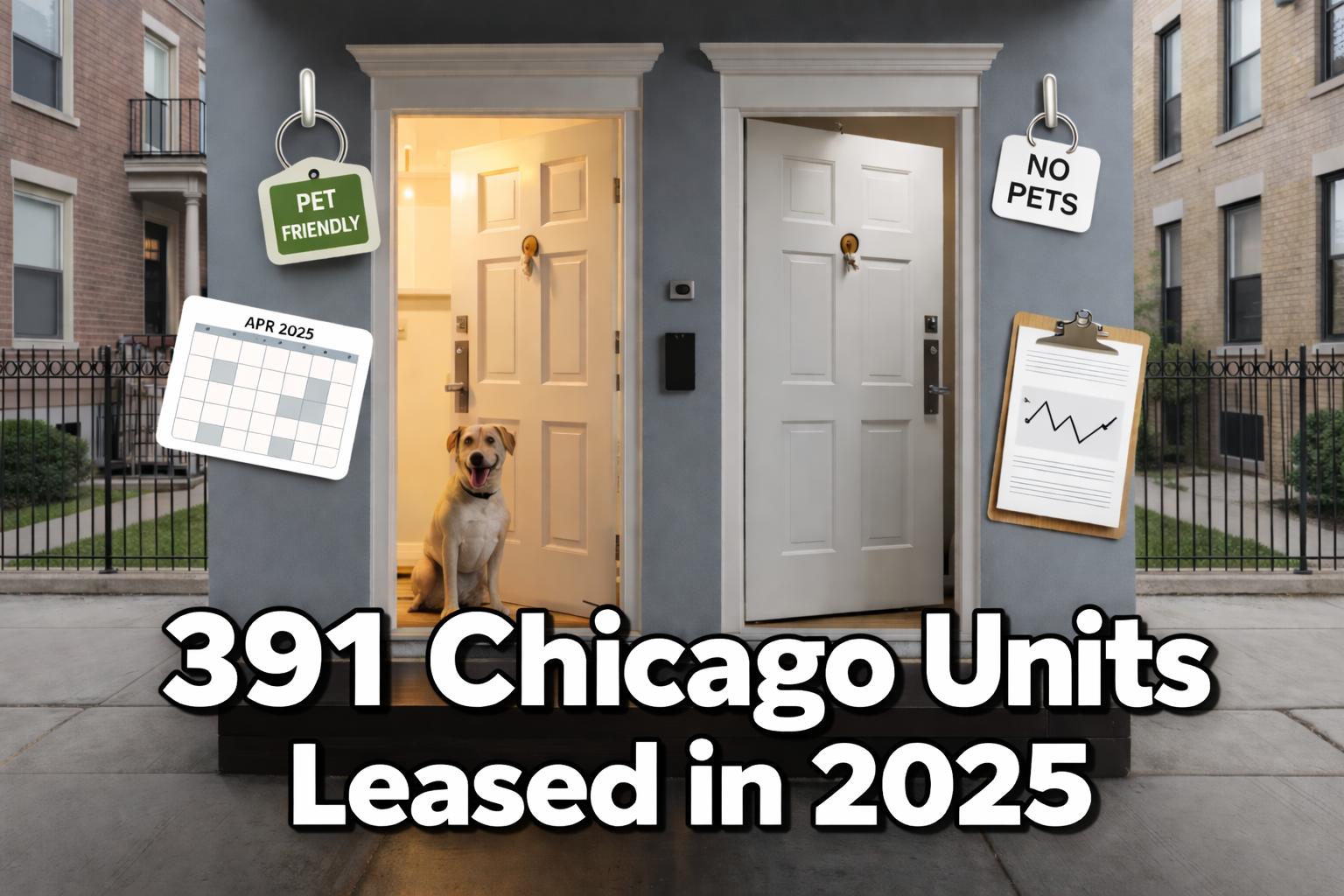
How long does it really take to rent pet-friendly vs. no-pet units? We analyzed 391 leases across Chicagoland to find out.
Many Chicago landlords struggle with whether or not to allow pets in their rentals. One of the most common questions we hear from property owners is, "Will allowing pets help me rent faster or just create more headaches?"
If you know me, follow my content, or listen to the Straight Up Chicago Investor Podcast, you know my thoughts about pets. I always tell investors they need to be open to allowing pets for many reasons. But when I saw our 2025 data on what we leased here at GC Realty & Development, even I was shocked. The difference in days to lease between properties that allow pets and those that don't affects investor ROI.
We love data at GC Realty & Development, so we decided to break down what went down last year. After we released our first article, 2025 Chicago Rentals: Days On Market Vs Applications, so many Chicago inventors reached out wanting us to share more Chicago leasing market numbers.
The 2025 Study: 391 Leases Across Chicagoland
About the Data
This study is based on 391 leases signed by GC Realty & Development, LLC in 2025 across the greater Chicago metropolitan area. The 391 units were located in over 60 municipalities from Chicago proper to the suburbs, from Schaumburg, Naperville, Elgin, Crystal Lake, and everywhere in between. Rental units included apartments, flats, condos, and single-family homes.
Pet-Friendly Properties: 232 (59.3%)
No-Pet Properties: 159 (40.7%)
Analyzing the Data
In 2025, we leased 391 units for clients we manage. We leased an additional 125 units for other clients we don't manage for. For the sake of this conversation, we only used the data from properties under our management. Because we controlled the entire process, we found the fewest variables when looking back at the data.
Learn more about our tenant placement-only services.
The Headline: Pet-Friendly Properties Lease Slightly Faster
For this article, we measured how long each property sat on the market before a signed lease agreement. Then we compared the pet-friendly properties against those with no-pet policies.
Here's what we found.
Metric | Pet-Friendly | No Pets |
Average Days to Lease | 21.9 days | 23.3 days |
Median Days to Lease | 15 days | 16 days |
Leased Within 14 Days | 49.8% | 44.2% |
Leased Within 30 Days | 75.1% | 76.1% |
On the surface, pet-friendly properties leased about 1.4 days faster on average, but there are a couple of caveats.
Changes from ‘No Pets’ to ‘Pets Allowed’
When a property lags behind our averages for showings and applications, we review every aspect of its marketing. One aspect is allowing pets.
If a client doesn’t want to allow pets but we see below-average results, we address this with them. In 35% of those conversations, the client then agrees to allow pets, and we update the marketing. For our data collection purposes, these would fall under “allowed pets” because that’s how they were leased. All this means is that they could’ve impacted the overall days to lease by a small margin (we like to address issues quickly at GC Realty).
What the Numbers Tell Us
Pet-Friendly Wins on Speed to Lease
Nearly half (49.8%) of our pet-friendly properties leased within the first two weeks, compared to 44.2% of no-pet units. As an owner, especially if you pay a mortgage and utilities on a vacant property, even a few days matter.
Both Categories Perform Similarly Over 30 Days
By the 30-day mark, the numbers converge, and about 75% of properties in both categories were leased. This tells us that the pet policy matters most for that initial burst of interest and applications. Often, a property making it to 30 days is more about pricing. This has been especially true in the low-inventory, high-demand rental market we have been fortunate to live in over the last few years.
The Outliers Are Roughly Equal
About 5% of properties in both categories took longer than 60 days to lease. Having a no-pet policy didn't protect owners from occasional slow-moving listings, and allowing pets didn't create significantly more outliers. In these cases, the data indicates that clients may have resisted our price guidance from the start, and we’d initially listed an overpriced rental.
Why Pet-Friendly Properties Move Faster
It all comes down to simple math: demand.
According to the American Pet Products Association, approximately 66% of U.S. households own a pet. In the Chicago rental market, that translates to a massive pool of qualified tenants who immediately filter out any listing that doesn't allow their dog or cat.
When you allow pets, you market to the full tenant pool. When you don't, you're cutting out two-thirds of potential renters before they even see your listing. That’s a simple numbers game when the goal is to get as many qualified eyeballs on your property as possible.
But What About the Risks?
We hear it all the time: "What about damage? What about complaints from neighbors?"These are valid concerns, but they're manageable with the right approach.
More often than not, your risk from a pet is equal to the risk of the applicant's qualifications. A superstar, highly qualified applicant with a pet is likely to carry lower risk than a questionable or average tenant (with or without pets).
However, below are a few ways to further protect yourself as an owner when you allow pets in your rental homes.
1. Pet Deposits and Pet Rent
Most landlords in our portfolio charge a non-refundable pet fee ($250-$500) and/or monthly pet rent ($25-$50). This covers additional wear and tear and creates a financial buffer.
2. Pet Screening
Services like PetScreening.com allow landlords to verify vaccination records, review pet behavior history, and even get a "pet score" similar to a tenant credit score.
3. Breed and Size Restrictions
You don't have to allow everything. Many landlords successfully allow cats and dogs under 50 pounds while restricting certain breeds for insurance purposes.
4. Lease Clauses
A well-written lease should address pet waste cleanup, noise complaints, and grounds for lease termination related to pets.
The Real Cost of "No Pets"
There’s another hidden side to the story: 75% of the units that didn't allow pets had one or more price drops to sign a lease. Meanwhile, only 35% of the units that allowed pets needed a price drop. Then the most alarming stat: non-allowing pet units leased for 3.75% on average vs the units that allowed pets.
The True Cost of Vacancy: Why Speed to Lease Matters
Our Recommendation
Before reviewing our 2025 data, I expected a larger gap in the number of days between allowing and not allowing pets. But my heart and investor's pocketbook would still put my money on allowing pets. Based on our 2025 leasing data across 391 properties in Chicagoland, you can:
Gain access to a larger tenant pool
Lease your rental for fewer days
Put safeguards in place to lower risk
Get a higher rent amount
Our recommendation: Allow pets with smart safeguards.
Applicants and Screening
Finding qualified applicants and placing them quickly in vacant rental homes gets you the most for your investment. At GC Realty & Development, LLC, we pride ourselves on beating Chicagoland market averages.
Our marketing consistently brings in more applications from highly qualified tenants. We’ve created a screening process that weeds out red flags and accepts only the best applicants. This resulted in zero evictions in 2024! We share our techniques in the free screening guide!
Download the Chicago Tenant Screening Guide
And because we’ve perfected our processes for efficiency, we get paying tenants into your rental properties faster, so your monthly rent checks flow sooner. Learn more about our proven process and how we can help you get the most from your rental with our property management services.