

 Vendor Portal

Author: Mark Ainely | Partner GC Realty & Development & Co-Host Straight Up Chicago Investor Podcast
A few times a month I get some version of this question from a Straight Up Chicago Investor Podcast listener or from an owner we manage for: "Mark, I have a basement I think could be a legal unit. What is the minimum ceiling height in Chicago?" It is one of the most common questions we hear when investors start thinking about legalizing an existing garden unit or carving out a new one to boost income on a building they already own.
The good news is the answer got better a few years ago. The even better news is that if you know the rules, you can walk into a property with a tape measure in hand and tell pretty quickly whether a basement unit is worth pursuing or whether you should move on.
Here is what every Chicago owner needs to know.
The Short Answer
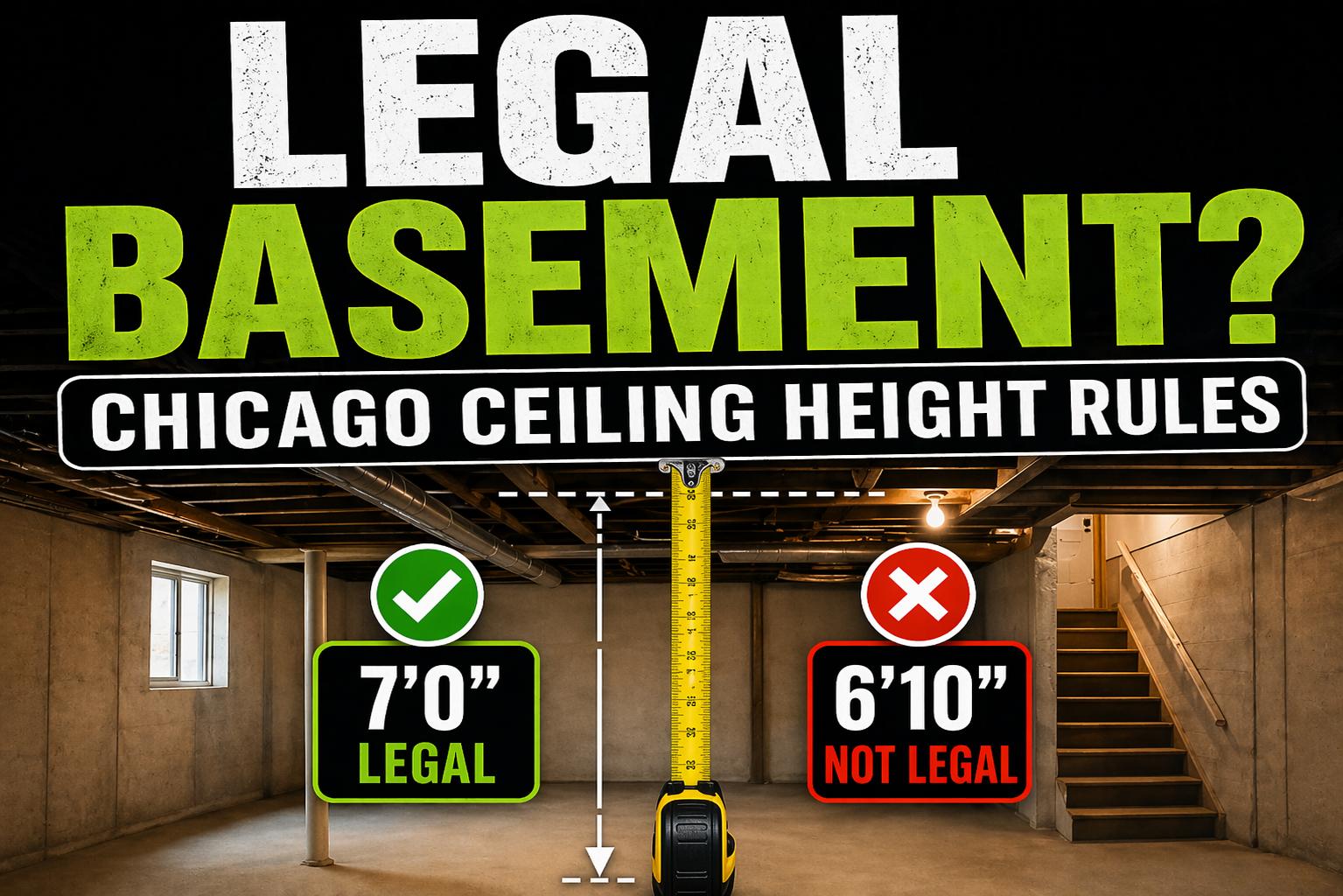
For a habitable room inside a residential dwelling unit (Group R occupancy), Chicago now requires a minimum ceiling height of 7 feet. That is measured from the finished floor to the finished ceiling, not from bare slab to joist.
This applies to bedrooms, living rooms, dining rooms, kitchens, and every other space considered habitable under the code. Bathrooms, toilet rooms, and laundry rooms get a lower threshold at 6 feet 8 inches. And in basements specifically, ducts, beams, girders, and similar projections can drop to 6 feet 4 inches without killing your project.
What Changed and Why It Matters
For decades, Chicago required 7 feet 6 inches as the minimum ceiling height in habitable rooms. Section 13 64 050 of the older Municipal Code still shows that number. The modernized Chicago Building Code brought the residential minimum down to 7 feet for Group R occupancies, which aligned us with the International Building Code and opened up a lot of basements that were previously stuck in gray market status.
Six inches does not sound like much. In the real world, it is the difference between a basement that pencils for legalization and one that does not. If you have been sitting on a building where the basement scans at 7 feet 1 inch or 7 feet 2 inches finished, you are now in play when you probably were not a decade ago.
The Specific Numbers
Here is the breakdown I keep in the back of my head when I am walking a basement with an owner:
Habitable rooms in a dwelling unit: 7 feet minimum
Hallways inside the dwelling unit: 7 feet minimum
Bathrooms, toilet rooms, and laundry rooms: 6 feet 8 inches minimum
Projections such as ducts, beams, and girders in basements: 6 feet 4 inches permitted
The projection allowance is the piece most owners miss. You do not need a perfectly clean 7 foot ceiling across the entire footprint. You need it across the habitable area. Where the HVAC trunk runs or a steel beam crosses the space, you can go lower. That flexibility has saved a lot of projects.
A Quick Note on Section 8
If you landed here looking for Section 8 ceiling height requirements, that is a different (but related) question. HUD Housing Quality Standards and CHA bedroom qualification rules have their own measurement quirks, especially around how soffits and sloped ceilings can knock a room out of qualifying as a bedroom. I covered that in detail in a separate article: Predicting Rent Determination: What Chicago Landlords Need to Know Before Accepting Section 8.
Ceiling Height Is Only One Part of the Checklist
Clearing the ceiling height test is table stakes, not a green light. A legal garden or basement unit in Chicago also needs to hit these other requirements:
Egress. The unit needs its own entry and exit. The exit cannot force residents to pass through a bedroom, bathroom, or toilet room.
Natural light and ventilation. Every habitable room needs windows sized to code. Bedrooms need an egress window or equivalent.
Waterproofing. Floors and walls need to be impervious to surface water and groundwater. If the building has any history of water issues, address that before inspection.
Zoning compliance. The building needs to be zoned for the number of units you want to operate. A two flat zoned for two units cannot legally become a three flat without a zoning change or an ADU ordinance path. This kills more basement legalization projects than any structural issue.
Life safety. Smoke detectors, CO detectors, and fire rated separations between units are all required and all get checked at inspection.
The ADU Ordinance Angle
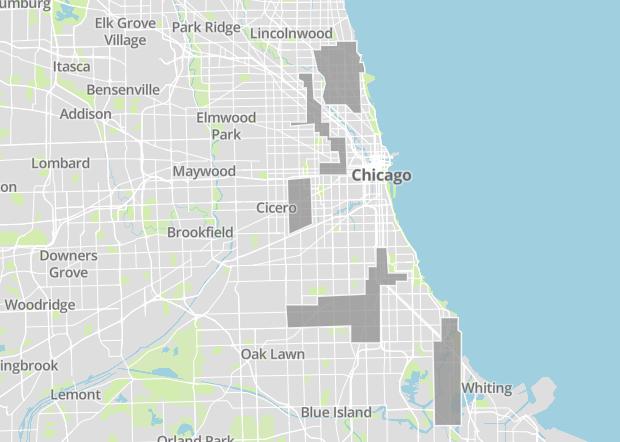
Here is where things got a lot better this month. The five ADU pilot zones that had been in place since 2021 ended March 31, 2026. On April 1, 2026, Chicago’s expanded ADU ordinance took effect, and it opens up a much bigger piece of the city.
Under the new rules:
Multifamily and mixed use zones are in by right. RT, RM, B, and C zoning districts are eligible without needing aldermanic approval.
Single family RS zones require an opt in. If your property is in an RS district, ADUs are only allowed if your alderperson has opted the ward into the program. Some have, some have not. Worth checking before you spend money on plans.
Way more parcels now qualify. Roughly 320,000 parcels are eligible under the new ordinance, up from about 116,000 under the pilot.
Ceiling height rules did not change. Everything I covered above on 7 feet, the 6 feet 8 inch allowance for bathrooms, and the 6 feet 4 inch projection allowance still applies.
There are a few strings attached worth knowing about. If you add two or more ADUs in the same building, 50 percent of those new units have to be rented affordable at 60 percent AMI or below for a minimum of 30 years. ADUs cannot be used as short term rentals. And if you are building a new coach house, the project is subject to an apprenticeship requirement for the general contractor.
The practical takeaway: if you sat on the sidelines during the pilot because your property was outside those five zones, it is time to take another look. If you are in an RS zone and you are not sure whether your alderperson has opted in, reach out and we can check.
The city launched an official interactive ADU eligibility map when the new ordinance took effect. Plug in an address and it will tell you whether the property qualifies under the new rules: chicago.gov/adu. For a deeper walkthrough on how to actually execute one of these, listen to my recent podcast episode with architect Samuel Pavlovcik: Legalizing Apartments: The New ADU Playbook for Chicago Investors with Samuel Pavlovcik.
How to Evaluate Your Building Before You Spend a Dollar on Plans
Here is the order I tell owners to walk through before they ever call an architect.
First, measure the right way. Not from the joists. From the finished ceiling. And not from bare slab. From the finished floor. Account for any flooring or ceiling work that would happen as part of the build out. If you are already at 6 feet 10 inches finished, a legal unit is probably not happening without excavation, and underpinning is expensive enough that it almost always breaks the deal.
Second, check the zoning. Pull the zoning map or ask us to pull it for you. If the property is not zoned for the unit count you want, skip straight to the ADU question.
Third, look at egress and windows. If there is no practical path to a legal entry that does not cut through another unit or a bedroom, you have a design problem that might not be solvable on that particular building.
Fourth, be honest about water. A basement that has taken water in the last ten years is a basement that needs real remediation before anyone sleeps down there.
If you clear all four, then you are ready to talk to an architect and start drawing.
The architect we recommend is Samuel Pavlovcik, who you can find on the Straight Up Chicago Investor Build Your Team page: https://www.straightupchicagoinvestor.com/build-your-team. Samuel knows the Chicago basement legalization path cold and has been through the process enough times to tell you quickly what is going to work and what is not.
Common Mistakes I See
Two mistakes show up more than any others.
First, owners measure from the joists instead of the finished ceiling. They walk a basement, get 7 feet 4 inches on the tape, and assume they have room to spare. Then the build out adds drywall, insulation, flooring, and maybe a dropped section where ducts run, and all of a sudden they are under 7 feet across the habitable area. Measure finished to finished, and if you are not there yet, subtract what the build out will cost you.
Second, owners assume the old 7 feet 6 inch rule is still the law. That was the number for decades, and it is still baked into a lot of the older articles and online write ups about Chicago basement units. Owners read that, see a basement at 7 feet 2 inches, and walk away from a project that would actually pencil under the current code. Do not leave money on the table because the internet has not caught up.
If You Are Buying a Building and Want a Second Opinion
If you are under contract or actively shopping and you want a second set of eyes on the location, the building, the existing tenants, or the numbers, there are two easy ways to get started.
Run the free rental analysis first. Plug in the address and get a clear picture of what the building should be earning, what similar units are renting for, and whether the current income holds up to scrutiny. It takes about two minutes and costs nothing.
If the numbers raise questions, or if you just want to talk through what you are looking at before you commit, schedule a call. Bring whatever you have and we will work through it together.
You do not have to figure this out alone before making one of the biggest purchases of your life.