
 Vendor Portal


Author: Mark Ainley | Partner GC Realty & Development & Co-Host Straight Up Chicago Investor Podcast
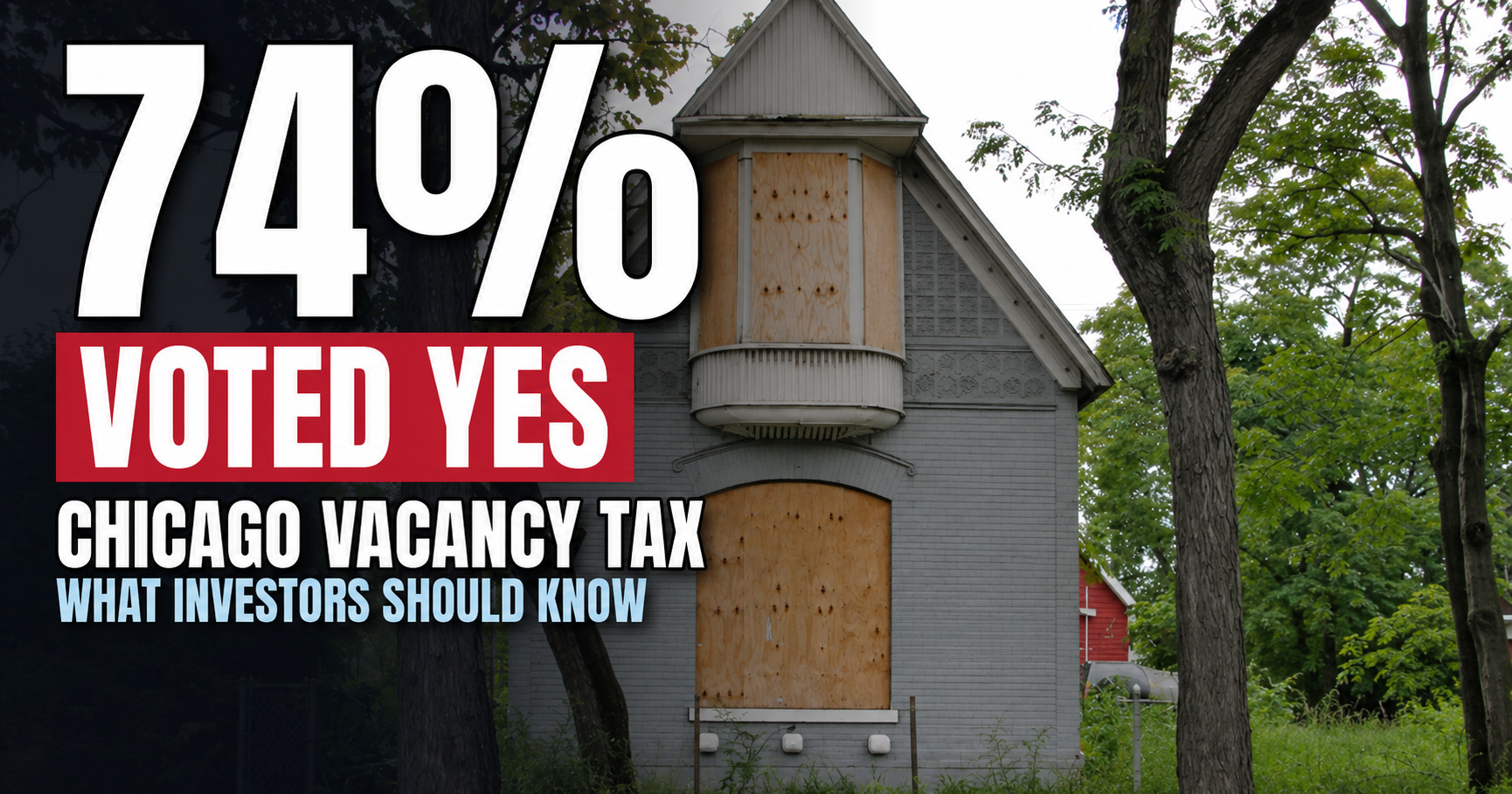
On November 3, 2026, Chicago voters sent a loud message about vacant property. Nearly 74% voted yes on a ballot question asking whether owners of long term vacant or undeveloped commercial and investment property should pay an annual charge to help fund Chicago Public Schools.
Chicago is a majority renter city, with about 54.5% of households renting according to Census estimates. But homeowners vote at higher rates, so a 74% yes vote means plenty of homeowners supported this too. For most voters, it's a tax on somebody else's empty building.
There's another group that wasn't part of that 74%. Many Chicago investors live in the suburbs or out of state, and they couldn't vote on this question at all. If an ordinance moves forward, the owners most likely to pay it may be the ones who had no say.
Since the election, I've had a few owners ask me, "Is this happening, and does it hit my property?" The short answer is not yet. But the vote tells you where things are headed, and it's worth getting ahead of.
Key Takeaways
The vacancy tax question was advisory. Nothing changes until the Chicago City Council writes and passes an ordinance.
Voters backed it by a wide margin, and Chicago Public Schools board members have said they want to see it become reality.
The ballot language targeted long term vacant and undeveloped commercial and investment property. The details that matter to you, like how long counts as vacant, haven't been written yet.
The simplest protection is the same thing that protects your returns today. Keep your property leased.
What Voters Actually Approved
The question asked if Chicago should require owners of long term vacant or undeveloped commercial or investment properties to pay an annual charge to support CPS. About 26% of voters, or 163,655 out of 624,339, said no.
Here's the key point. The question was non binding. It measures public opinion, it doesn't create a law. For a tax to take effect, someone has to introduce an ordinance and the City Council has to approve it. As of this writing, no ordinance has been introduced.
The push comes from the school side. CPS is under serious budget pressure, and board members see the vote as a mandate to find new revenue from property owners who leave buildings and land sitting empty.
What It Means for Investors
If your rental turns over every year or two and gets leased in a reasonable window, this proposal isn't aimed at you. The intent is to push owners who sit on empty buildings and land for long stretches, not to penalize normal turnover.
That said, I wouldn't bank on that yet. Until there's ordinance language, nobody knows exactly where the line will be drawn. A unit that sits for six months during a slow winter, a rehab that drags, or a property held empty while an owner decides whether to sell could end up closer to that line than you'd like.
This also isn't a brand new idea. Baltimore approved a vacancy tax in 2024 that charges three times the normal property tax rate in the first year a building is deemed vacant and four times every year after. Chicago already passed a 2024 ordinance requiring owners of vacant storefronts to register, maintain and insure them. When a city starts looking at vacancy, the rules tend to get stricter over time, not looser.
The bigger takeaway for me is the direction. Chicago voters and CPS are paying attention to empty property, and owners who let units sit are going to feel more pressure going forward.
What to Watch for Next
If an ordinance gets introduced, these are the questions I'll be reading for first.
How long is "long term." Is it 90 days, six months, a year? This one detail decides whether a normal lease up period is ever at risk.
Whether residential rentals are included. The ballot named commercial and investment property. Watch whether single family and small multifamily rentals between tenants are carved out or pulled in.
Exemptions. Look for protections for properties that are actively listed for rent or sale, under construction or permitted rehab, under contract, or tied up in probate or an eviction.
How vacancy gets proven. Will the city rely on utility usage, inspections, owner registration, or neighbor complaints? Each one creates a different paperwork burden for owners.
The size of the charge. A flat fee and a multiple of your property tax bill are very different numbers.
The place to follow this is City Council committee hearings. Industry groups like the Chicago Association of Realtors and local landlord associations usually see draft language early and push for owner input before a vote. We'll be watching too and will share updates as they come.
Frequently Asked Questions
Is Chicago's vacant property tax in effect? No. The November 2026 ballot question was advisory. It would take a City Council ordinance to create the tax.
Does it apply to suburban properties? The question was on the City of Chicago ballot and would only apply inside city limits.
Will my rental get taxed if it's empty between tenants? The ballot language focused on long term vacancy, so normal turnover doesn't appear to be the target. The final answer depends on how an ordinance defines vacancy.
The Best Protection Is a Leased Property
Whatever the City Council decides, an occupied unit is the one property that will never be in the conversation. And honestly, vacancy is already costing you. Every empty month is lost rent plus taxes, insurance, utilities and the risk that comes with an empty building in winter.
If you have a Chicago property sitting empty, or one coming up on turnover, now is the time to act.
Find out what your property should rent for. Request a free rental analysis from our team. We'll look at your property against current comps and tell you where to price it so it leases instead of sits.
Get your vacant property leased. Our leasing team handles close to 500 lease transactions a year across Chicago and the suburbs. Schedule a call with us about tenant placement and we'll put a plan together to get your unit filled with a qualified tenant.
Don't Go At This Alone!
GC Realty & Development has been managing and leasing Chicagoland rentals since 2003. Today we manage about 1,500 units across more than 100 municipalities, and we've worked with thousands of investors over the years. When the rules change, our team is already tracking it so you don't have to.
Founder, Partner, Podcast Co-Host, and Investor