
 Vendor Portal
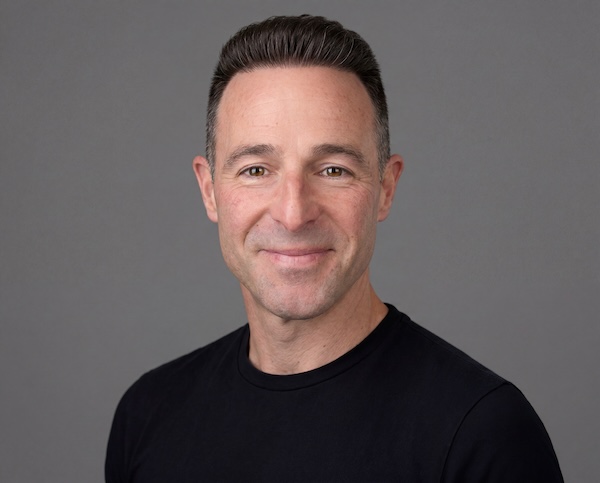
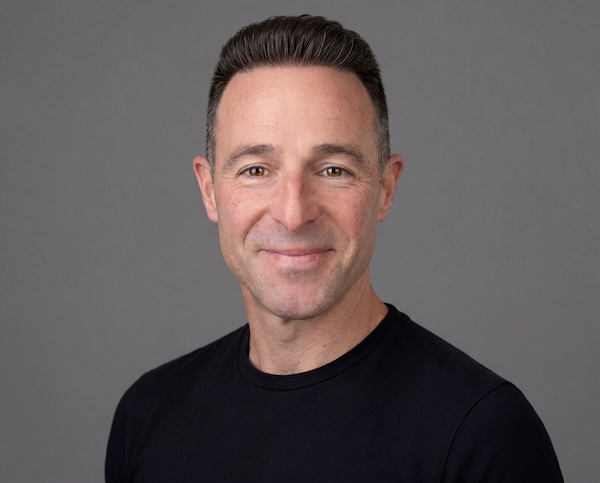
Author: Mark Ainely | Partner GC Realty & Development & Co-Host Straight Up Chicago Investor Podcast
If you're a Chicago landlord trying to figure out how to scale a rental portfolio without losing your mind, this episode is for you. Mark Ainley has been in the trenches of Chicago real estate since 2003. He grew up in Addison, started a company out of a smelly moldy office in West Chicago, and built one of the most recognizable property management and investment operations in the region. He manages around 1,500 tenants at any given time. He's done 400-plus podcast episodes. And he learned most of what he knows the hard way.
This isn't theory. This is an operator talking directly to other operators. If you own Chicago investment properties or you're thinking about getting into the game, you're going to want to hear what he has to say.
https://podcasts.apple.com/us/podcast/mark-ainley/id1580833415?i=1000760118290
From Addison to Apartments: Mark Ainley's Straight-Talk Story
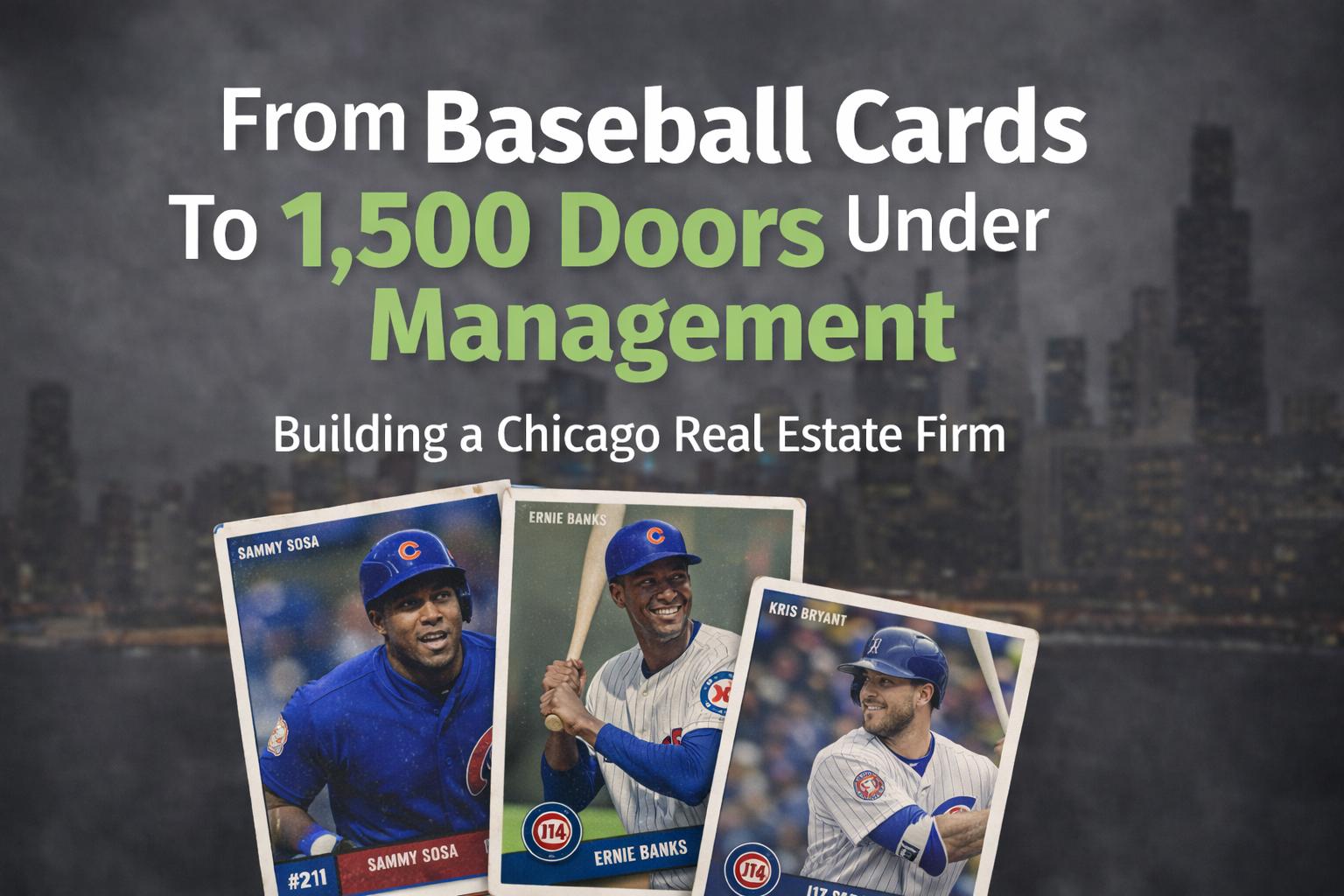
I grew up on what I'd call the other side of the tracks in Addison. My parents were divorced, and I always saw the kids on the other side having things. That stuck with me. By the time I was eight years old, I was trading baseball cards at hotel tables on weekends. My grandfather drove me around. I'd bike to three or four card shops in the area. My parents didn't know how far I was going.
But here's the thing. Opening packs of cards at a dollar a pack and figuring out which ones to sell and which ones to keep, that gave me a buying-low and selling-high mindset before I even knew what that meant. I just didn't realize it at the time.
I played football through high school. Made it to the 6A state championship. Got crushed, but we got there. And that taught me something too. Sometimes you're up, sometimes you're down. Business is the same way.
The Road to Real Estate Wasn't Straight
I went to Harper for a year and left with half a credit. Switched to DeVry because they showed me a clear path. Take this, take this, take this, get your bachelor's. That was it. I could execute that. I ended up with a degree in telecommunications and business management.
But before I finished, on February 13th, 2001, I had a bad day. Car wouldn't start. Snow everywhere. I called some buddies and said let's go to California. Five of us piled in a car, found a place online in Las Vegas on the way out. I was in LA during 9/11. Came back about a year later.
By 2003, I was starting GC Realty with my partner. GC stands for Gaetano Shirello, his father, who helped name the company. Same setup as every business I'd been in before. He threw in three, I threw in two, he got naming rights. We started in a smelly moldy office in West Chicago that we shared with some concrete guys who only needed room for an espresso machine. That's where GC was born.
We Tried Industrial. Didn't Work. Then Luxury Homes. That Didn't Either.
My partner came from commercial and industrial real estate. That was the plan. But industrial is brutal to break into. You finally get somewhere, you get an LOI instead of a contract, then you've got a Phase 1, then a Phase 2, then the lender's not there. So many layers.
Then somebody in our network needed to sell a million-dollar house. We had nothing else going on, so we tried it. Got both sides of the deal. $55,000 commission on our first shot. We thought that was all we were doing from that point on. We never sold another luxury home.
But it was 2004, 2005, 2006. You could get anyone a mortgage and sell anything. We worked day and night. Sign goes up, lockbox goes on, the commission was as good as counted within 60 days. Friday nights there'd be 10 people in the office writing contracts. That was a real market.
The Condo Conversion Lesson I Had to Apologize For
During those years I was selling a lot of condo conversions. Apartment complexes going condo. I did about 25 of those deals. I was working with the sales teams, bringing them flowers, bringing food. And I'd go to a buyer and tell them, look, you're going to be $100, $200 underwater right now, but when this complex sells out we're going to sell yours and you're gonna make $30-40 grand.
One day an investor with money and experience looked at me and said that's the stupidest idea he'd ever heard. He brought up American Invesco and how they bankrupt half the city doing something similar. I left that conversation thinking he was an idiot.
I called him years later to apologize.
The lesson: appreciation plays are not a business model. I didn't truly understand cash flow until I ended up in Washington Park in 2009.
2009: The Day I Finally Understood Cash Flow
A client asked me to come with him to a live in-person auction downtown. I went mostly for the experience. Hot room. Heart pounding. He walked out buying three properties for around $75,000 total. A two-flat in Englewood, a condo in Washington Park, a single family in Englewood.
I thought he'd lost his mind.
He wanted to check out the Washington Park condo on the way to Hyde Park. I'm pulling up to this building on a hot May afternoon. Front door's kicked open. I don't need a lockbox. First floor has an eviction sign. Second floor, where my client bought, is stripped out completely.
I'm standing there thinking, do I run? Is this guy screwed?
He's walking around calm, processing. Then he looks at me and says, see if the other units in the building are available. I said, what are you talking about? He said, we got this unit for $25,000, put $25,000 into it, that's $50,000 in, and we'll probably get $1,100 a month rent. Easier to manage if we own the whole building.
That was the first time in my career I genuinely understood cash flow. Everything up to that point had been appreciation. Buy it, it goes up, you sell. But this was different. This thing could actually cash flow every single month regardless of what the market did.
We ended up buying about 200 properties doing what you'd call a BRRRR-type strategy on the South Side. Around 2013 we ran out of money because you leave maybe 3% in each deal and it adds up fast. I threw something up on BiggerPockets. A guy from Europe bought 27 units from us the first week. We realized we were in the turnkey business. We ended up selling close to 500 units turnkey while keeping the management on almost all of them. That built our footprint on the South Side.
Management Was Never the Plan. And Then It Became Everything.
I resisted property management for a long time. My first experience managing a rental was a disaster. Rented my Schaumburg condo to the first person who called off the Daily Herald ad. Accepted a partial security deposit. Screwed everything up. Eventually had to file an eviction and do a modern-day cash-for-keys. I decided I'd just sell people their problems, not manage them myself.
For years that worked. But investors kept asking us to manage. I kept saying no. Then I'm sitting at a closing table at Chicago Title in Arlington Heights with my attorney and he says, Mark, I need you to manage this building. I can't pause it, this isn't what he does. He said, I know you learned all the lessons yourself, $50 a month. I said I didn't even have a management agreement. He said he'd draft one and I could use it for everybody else.
That's how it started. The next day two more clients called wondering why I'd manage his building but not theirs. We picked up two more units.
It was always a means to an end. First $50 covered a water cooler. Next $100 covered the electric bill. But somewhere in there we kept growing and by 2014 we had 250 units and half a million square feet of commercial space and absolutely no process in place. My partner Brian finally said, what is going on? Everything ran through me and him. Hub-and-spoke model where we were the hub. That was the moment we knew we had to build systems.
Now we manage around 1,500 tenants at any given time. Building management software, documented processes, clear workflows. People know where to get their lease online. It took years to get there. It wasn't magic.
How to Handle 1,500 Tenants Without Going Insane
People ask me how I manage the volume. Here's the honest answer: I screen calls and call right back. That's it.
If I answer a call from an upset tenant and start listening, I'm going to feel obligated to solve it right that second. I'm 13 or 14 minutes in and now I'm bothering someone else in the office to handle it. That's not efficient for anyone.
Instead I let it go to voicemail, send a quick text saying I got your message and I'm getting it to the right person, and route it properly. The tenant feels acknowledged. The right person handles it. The problem gets solved without me becoming the bottleneck on every single issue.
My number is everywhere. 20% of 1,500 tenants are going to call on any given day. You can't answer every one. But you can make sure everyone gets a response.
Q&A Section
Q: How did Mark Ainley get started in real estate?
A: Mark got his real estate license after realizing he would have earned a $3,600 commission on a condo he bought himself. He signed up for the home study exam at Real Estate Academy in Niles and had his license within a few months. Shortly after, he co-founded GC Realty with his partner.
Q: What is GC Realty and where does the name come from?
A: GC stands for Gaetano Shirello, the father of Mark's co-founder. The company started in a shared office in West Chicago with concrete contractors. Mark's partner contributed more of the startup capital and got naming rights as part of the deal.
Q: Did Mark Ainley always plan to do property management?
A: No. He actively resisted it after a bad experience managing his first rental property in Schaumburg. He eventually started a management company because an attorney client at a Chicago Title closing table asked him to manage a building for $50 a month and offered to draft a management agreement Mark could use for future clients.
Q: What was Mark's first experience understanding cash flow?
A: It came in 2009 when he accompanied a client to an in-person auction downtown. The client bought three distressed properties for around $75,000 total. When Mark saw the numbers up close, buying for $25,000 and putting $25,000 into a unit to rent for $1,100 a month, he understood for the first time that a property could generate income regardless of market appreciation.
Q: How did GC Realty build its South Side portfolio?
A: Starting around 2008 and 2009, they bought roughly 200 distressed properties using a BRRRR-style approach on the South Side of Chicago. Around 2013, they ran short on capital, listed properties on BiggerPockets, and discovered the turnkey investing model. They ended up selling close to 500 units turnkey while retaining property management on most of them.
Q: How does Mark handle managing around 1,500 tenants at once?
A: He screens calls and calls back immediately. If he answers a call from an upset tenant and listens in real time, he feels obligated to solve it on the spot, which pulls him away from other priorities. Instead, he lets calls go to voicemail, sends a quick acknowledgment text, and routes the issue to the right person. His number is public and he runs a high volume, so the system has to work without him being the bottleneck.
Q: What mistake did Mark make early on with condo conversions?
A: He sold buyers into condo conversion deals based on an appreciation story. Get in now, be $100-200 underwater, but when the complex sells out you'll walk with $30-40 grand. An experienced investor told him it was a terrible idea at the time. Mark disagreed. He called years later to apologize and admit the investor had been right.
Q: When did GC Realty realize they needed better systems?
A: Around 2014, when they had 250 units and half a million square feet of commercial space and no real process in place. Everything ran through Mark and his partner Brian in a hub-and-spoke model. Brian flagged it. They rebuilt the operation with proper software and documented workflows from that point forward.
Q: What does Mark think about the current Chicago market?
A: He sees Chicago as undervalued, particularly the West Side. He acknowledges there are headwinds but says on the street level there is real opportunity. Hundreds of buildings are about to come online. He believes investors who know how to underwrite and manage have a real edge in this market.
Timestamped Show Notes
00:04 Greg Viti introduces Mark Ainley, managing broker and founder of GC Realty
01:20 Mark grew up in Addison, two generations of family in the same area
02:45 Trading baseball cards from age 8, buying low and selling high early mindset
04:30 Baseball to football in high school, made it to the 6A state championship
06:10 Went to Harper College, left with half a credit, switched to DeVry for a clear path
08:00 February 2001, bad day in the snow led to driving to California with five friends
10:15 Returned from California, got his real estate license after missing a $3,600 commission
12:00 Co-founded GC Realty, started in a moldy office in West Chicago with concrete contractors
14:20 Tried industrial real estate first, too many layers, shifted to residential
16:10 Sold a million dollar house, made $55,000 commission, thought they were in the luxury business
18:30 Selling condo conversions 2004 to 2006, the appreciation pitch, and the hard lesson
21:00 2009 auction on the South Side, seeing cash flow for the first time in Washington Park
23:40 Buying close to 200 BRRRR-style properties on the South Side, eventually going turnkey
26:00 Property management started with $50 a month from an attorney at a Chicago Title closing
28:30 Scaling to 1,500 tenants, the hub-and-spoke breakdown in 2014, rebuilding with systems
Key Takeaways for Chicago Landlords
Understand cash flow before you buy. Appreciation is not a strategy you can count on.
Your first few deals will teach you more than any course. Mark bombed his first rental. He learned from it and built a 1,500-tenant operation.
Property management without systems falls apart fast. Hub-and-spoke only works until it doesn't.
Screening calls and calling back immediately is a system. Answering every call in real time is a bottleneck.
Turnkey investing and property management can run together. Managing what you sell keeps revenue and relationships in house.
If someone more experienced tells you your deal doesn't make sense, listen. Mark had to call that investor years later to apologize.
Chicago, especially the West Side, is still undervalued. The opportunity is real for landlords who know how to underwrite.
You learn the business by doing it. Start messy. Clean it up as you grow. Mark ran a $50-a-month management side deal before it became a company.
Cash flow beats appreciation plays every time when the market shifts. Know which game you're playing.
Having a clear plan you can execute matters more than the perfect plan. DeVry worked for Mark because they showed him exactly what to do. That same mindset applies to building a portfolio.
Guest Information
Mark Ainley Managing Broker and Co-Founder, GC Realty & Development, LLC
Mark Ainley has been in Chicago real estate since 2003. He co-founded GC Realty & Development, LLC, a full-service real estate brokerage and property management company. GC Realty manages approximately 1,500 tenants at any given time across Chicago and surrounding areas. Mark has hosted over 400 episodes of his own real estate podcast and is a regular voice in the Chicago investor community.
Mark is a licensed managing broker in Illinois and has experience across residential sales, property management, turnkey investment sales, and real estate development.