
 Vendor Portal
Author: Mark Ainely | Partner GC Realty & Development & Co-Host Straight Up Chicago Investor Podcast
People keep asking me the same thing. Why does Chicago not have any World Cup games this summer?
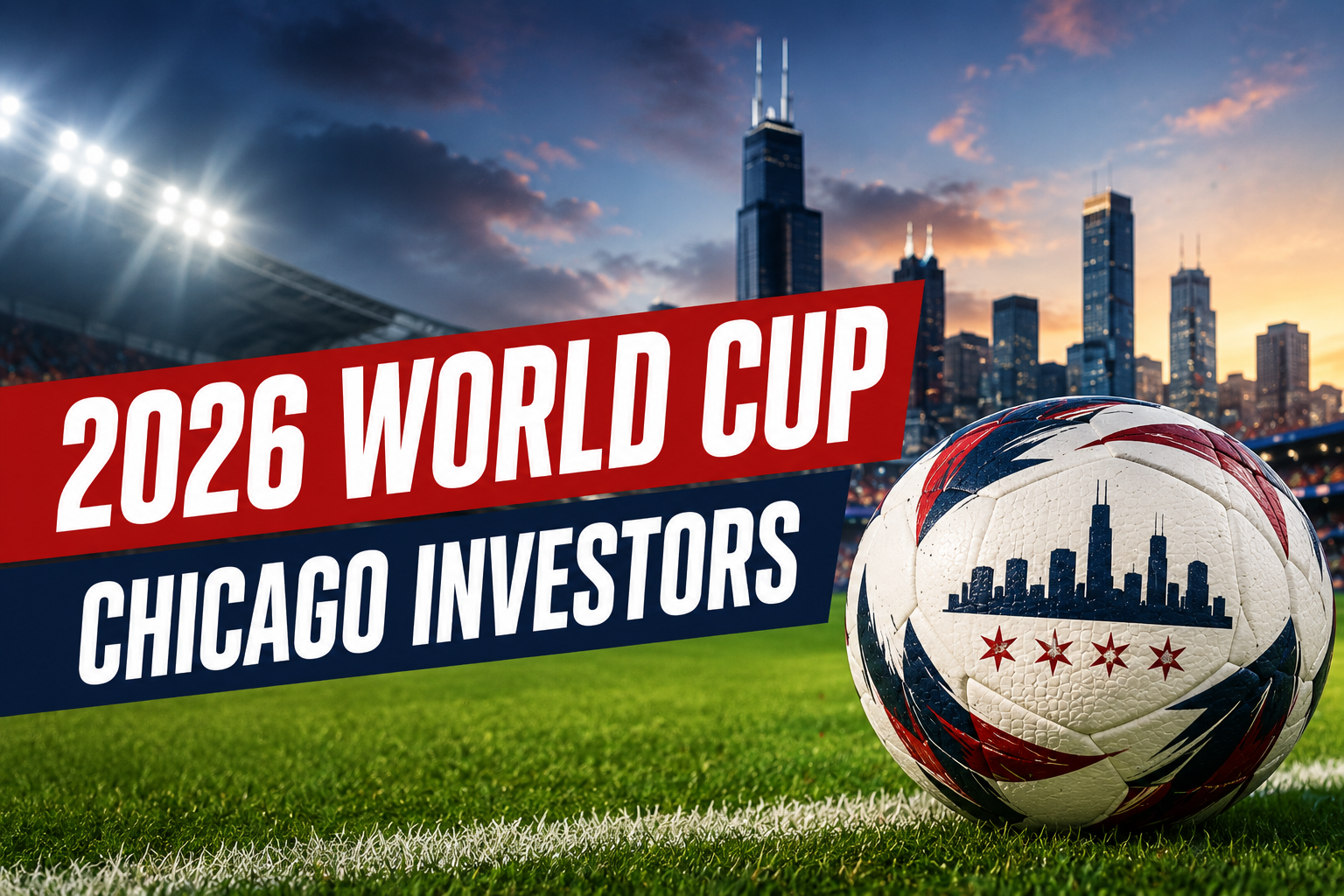
The World Cup is the biggest sporting event on the planet. It runs from June 11 to July 19. Eleven cities in the United States get to host. Chicago is not one of them. The closest games are all the way over in Kansas City.
So a lot of folks figure we got passed over. They think the city lost out. That is not what happened. Chicago chose not to host. The city looked at the deal and said no.
And I think it was one of the smartest money moves the city has made in a long time.
I want to walk you through why. Because the same lesson that made this a good call for the city is the same lesson that makes you a better real estate investor.
Key Takeaways
Chicago was not snubbed. The city pulled out of the bid back in 2018 on purpose.
FIFA wanted to keep the big money while the city paid the big bills and took all the risk.
Hosting would have pulled cash and focus away from the real things that make people want to live here and invest here.
The smartest money, whether you run a city or own rentals, protects its cash and its risk for the fundamentals that build lasting value.
Saying no to a shiny deal is often the best deal you ever make.
Chicago Was Not Snubbed. We Said No.
Chicago has done this before, and we did it well. We hosted World Cup games back in 1994. Soldier Field even held the opening game. So the city knows how to throw a huge event.
This time around, Soldier Field made the early list of possible spots. Then future presidential candidate Rahm Emanuel and his team looked at the numbers. They did not like what they saw. So the city pulled out in 2018.
The city said FIFA could not give them basic answers on some big unknowns. Those unknowns put the city and the taxpayers at risk. Emanuel later said it plain. He was not going to treat Chicago taxpayers like the "dumb money at the table."
That line stuck with me. Because that is exactly how a good investor thinks.
The Deal Was Bad For The Home Team
Here is how a World Cup deal works. FIFA keeps the good money. That means the ticket sales, the TV money, the sponsor money, the food and drink sales, and the parking. The host city does not get any of that.
So what does the city get? The bills. The city has to pay for security. For extra police. For fire crews. For medical help. For moving huge crowds around the city. Those costs are big, and they are hard to guess ahead of time.
So FIFA takes all the upside. The city takes all the costs and all the risk. On top of that, FIFA wanted the contract under Swiss law. They also wanted the right to change the deal whenever they felt like it.
Now think about that as an investor. Would you ever sign a deal where the other side keeps the profit, you pay every bill, and they can change the terms after you sign? No chance. That is not a deal. That is a trap.
The Real Cost Was Everything Else
Here is the part most people miss. The worst part was not even the dollars. It was what those dollars could have done instead.
Every dollar you spend on one thing is a dollar you cannot spend on something else. That is true for you. It is true for me. And it is true for a city.
A city has a long list of real problems to fix. Safe streets. Good schools. Transit that works. Clean and working services. A tax bill that does not chase people away. Those are the things that make people want to live here. And those are the same things that make people want to invest here.
A month of soccer fixes none of that. It can even make it worse, because it pulls money and attention away from the real work.
So the city would have taken on a pile of risk. It almost surely would have spent more than planned. And it would have pulled good money away from the stuff that actually keeps Chicago a place people want to call home. The city looked at all of that and passed. Good.
This Is The Same Call You Make On Every Deal
This is real estate to me. This is what we think about every single day at GC Realty.
You have only so much cash. You have only so much room for risk. When you say yes to one deal, you are saying no to every other thing that money could have done. The best investors know this in their bones.
The shiny deal is always the one that gets your blood going. The trophy property. The hot new area everyone is chasing. But the shiny deal often hides open-ended costs and risk you do not control. Smart investors run the numbers and walk away. They keep their cash and their risk for the boring stuff that actually pays.
Some of my best wins over the years were deals I did not do.
What Actually Makes A Place Worth Owning
A World Cup does not make a city a good place to invest. The fundamentals do.
When I look at Chicago and the suburbs, I am not looking for a one-month event. I am looking at the job base. The number of renters who need homes. How our prices stack up against the coasts, where you pay way more for way less. Strong, steady demand. That is what makes the cash flow work. That is what builds wealth over years, not weeks.
The same goes for a single property. A new stadium down the road or a big event nearby does not make a rental a winner. Well, unless it is the Bears finally building that stadium in Arlington Heights. If that one ever truly happens, call me first. The numbers make it a winner. The rent. The costs. The location. The demand. Buy on the fundamentals, not on the hype.
The Bottom Line
Let me be clear. Chicago has real problems. I am not going to pretend it does not.
But passing on the World Cup was not the city being weak. It was the city being smart with money for once. It protected its cash and its risk for the things that matter.
That is the same mindset that keeps real estate investors out of trouble. Do not fall in love with the trophy. Protect your money. Protect your risk. Put both where they actually build something that lasts.
That is how you win over the long haul. As a city, and as an investor.
Frequently Asked Questions
Why is Chicago not hosting any 2026 World Cup games? Chicago chose not to bid. The city pulled out back in 2018 under Mayor Rahm Emanuel. They felt the deal put too much cost and too much risk on the city and the taxpayers.
Did Chicago ever host the World Cup? Yes. Chicago hosted games in 1994. Soldier Field even held the opening game that year.
Where are the closest World Cup games to Chicago in 2026? Kansas City is the closest host city. It is the only host city in the whole Midwest this time around.
Why did the deal not make sense for the city? FIFA keeps the big money like tickets, TV, and sponsors. The host city pays for security, police, transit, and more. The city also could not get firm answers on what it would all cost.
What does this have to do with real estate investing? It is all about smart money. You have only so much cash and so much room for risk. The best move is often to pass on the shiny deal and protect your money for the fundamentals that build real, lasting value.
Don't Go At This Alone!
At GC Realty and Development, we manage around 1,500 units across Chicagoland. We help owners protect their time and lower their risk every single day. We do the hard, boring, important work so you do not have to. If you own rentals and you want a team that treats your money like smart money, let's talk.
My mission is simple. I want to help everyday investors build real wealth through real estate without losing their time, their money, or their minds. I have seen what good management does for an owner. I have also seen what bad decisions cost. I want you on the right side of that.
%20(3)_23.png)