

 Vendor Portal

Author: Mark Ainely | Partner GC Realty & Development & Co-Host Straight Up Chicago Investor Podcast
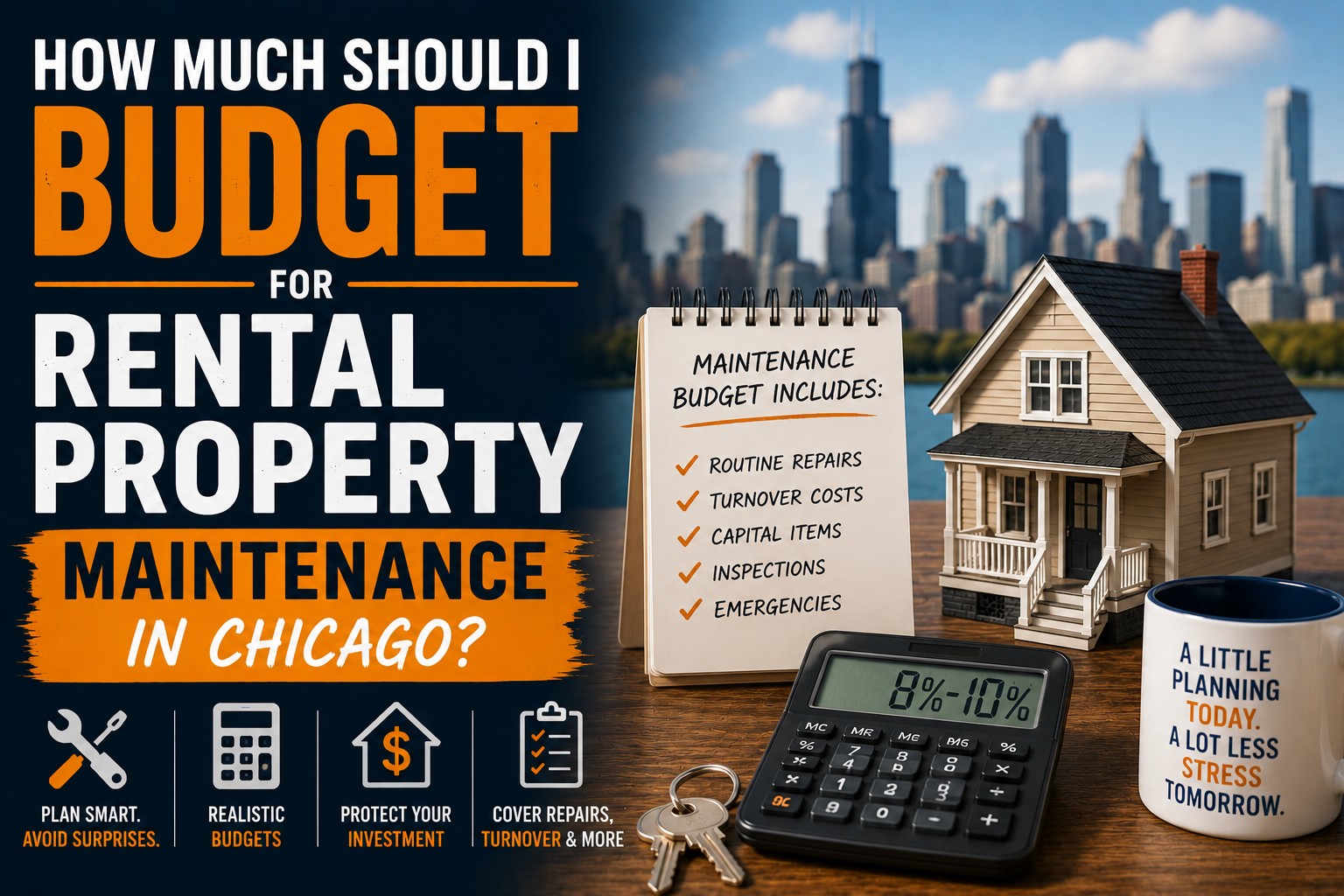
It is not exactly a rule. Nobody sits you down at your first investor meetup and writes 8 percent on a whiteboard. But somehow, if you have read a couple of real estate books or sat through any number of podcasts (including, occasionally, mine), you have ended up using it anyway. Set aside 8 percent of gross rent for maintenance. Or maybe 10 percent. Or maybe 1 percent of property value annually. Whatever flavor of it you absorbed, it is a flat number that sounds reasonable enough.
Here is what nobody points out. Following the pack on this one is one of the more reliable ways I see investors set themselves up for failure, disappointment, or just buying a property they should not have bought in the first place. The 8 percent default does not become wrong because it is poorly thought through. It becomes wrong because it is a single number applied across wildly different properties, neighborhoods, management approaches, and operator life situations. The herd answer cannot possibly fit all of those.
8 percent might be exactly right for your property. Or it might be half what you actually need. Or it might be twice. The only way you know is to think through the variables that actually drive maintenance cost on a Chicago rental. So that is what I want to walk through.
Key Takeaways
- The 8 percent maintenance reserve everyone uses is not actually a rule. It is an absorbed default that gets applied across wildly different properties, neighborhoods, and management approaches, which is why it fails so often.
- A realistic reserve should reflect the property's age and major system condition. A vintage building with original plumbing carries a fundamentally different reserve than the same property updated to copper.
- Suburban Chicagoland properties with annual rental license inspections carry a meaningful first year repair burden most investors do not budget for.
- Your rent strategy directly drives your reserve. Pricing slightly below market for long term tenants typically means a lighter reserve. Pushing ceiling rent and accepting 18 month tenant cycles means a heavier one.
- If you are self managing to save money, factor in your own opportunity cost honestly. The math often looks different when you include the value of your time and what else you would be doing with it.
1. The age and condition of the property
This is the obvious one but it is the one most investors round off.
An 1890s graystone in Logan Square or Lincoln Park that has not had a major system update in 20 years carries a fundamentally different maintenance load than a 2006 new construction townhome in the West Loop or South Loop. Both might rent for similar numbers. Both might have similar vacancy. But the maintenance reserve required to operate each one safely is wildly different.
The graystone is going to have an aging boiler, original plumbing somewhere in the system, plaster walls that crack, windows that leak, and decades of deferred maintenance that nobody has fully scoped out yet. You are not just budgeting for the next thing to break, you are budgeting for the cumulative wear that will surface over the next 5 years.
The 2006 townhome is going to have modern materials, no lead paint exposure, and far fewer structural surprises than the graystone. But at 20 years old, the original furnace, water heater, and roof are getting close to end of life if they have not been replaced yet. Your reserve there can be lighter than the graystone's, but it should not be casual.
The same logic applies in the suburbs. A single family home in Elk Grove built in the 1950s with original lead pipes is a different property than the same house with its plumbing fully updated to copper. A 6 flat in Addison built in the 1960s with lead pipes still in the system carries a meaningfully different maintenance profile and risk exposure than the same building once the plumbing has been redone. The age of the property is only half the question. The condition of the major systems inside it is the other half, and plumbing is the one most investors overlook.
For a deeper breakdown on how to evaluate major systems like plumbing, electrical, and HVAC before you set your reserve, we put together a free ebook on this.
If you do not know the actual condition of your property's major systems (furnace, water heater, electrical panel, plumbing, roof, windows), get a rental inspection done before listing by someone who actually understands rental property. Knowing the condition gives you a baseline. Guessing the condition gives you a budget that does not survive contact with reality.
2. The property class and neighborhood
A B class condo in River North does not operate the same way as a C class two flat in Englewood. I am going to say something that is true but uncomfortable: neighborhood matters for maintenance cost, and a lot more than people want to admit.
In higher class neighborhoods, you are typically dealing with newer or better maintained housing stock, tenants with longer renewal patterns, less wear on the unit during tenancy, and lower frequency of damage related repairs. Your reserve can be lighter.
In C and D class neighborhoods, you are typically dealing with older housing stock, higher turnover, more wear during tenancy, more frequent maintenance calls, and a higher likelihood of damage that does not fully come out of a security deposit. Your reserve needs to be heavier.
I am not telling you which neighborhoods to invest in. I am a fan of investors operating in different parts of the city for different reasons. But if you are underwriting a South Shore two flat with the same maintenance reserve as a Bronzeville single family, your numbers could easily be off in either direction based on the condition of each specific property and everything else we are walking through here. The gap is going to land on you a few years in.
3. Where the property is located, and what that village requires
Most investors looking at maintenance budgets are thinking about turnover paint, plumbing calls, and HVAC. They are not thinking about the village inspector.
If your property is in the city of Chicago, you have the CRLTO, the heating ordinance, building department response when something goes sideways, and the standard maintenance flow. That is a real cost but it is mostly reactive.
If your property is in a suburban village (Schaumburg, Hanover Park, Oak Park, Des Plaines, Carol Stream, Evanston, dozens more), you are also looking at annual rental license inspections. The inspector walks through and writes up everything they find. Smoke detectors not hardwired. GFCI outlets missing in the kitchen. Peeling paint in a closet. Worn caulk in the bathtub. None of it is dramatic. All of it has to be fixed within a fixed window or your license is not renewed.
I have seen first year suburban landlords get hit with $3,000 to $5,000 worth of inspection cited repairs in year one, because nobody told them this was coming. After year one, you have usually closed the easy stuff and the annual list gets smaller. But you have to budget for it up front.
Your maintenance reserve in a suburb with annual inspections needs to account for that work. A flat 8 percent across the city and the suburbs misses this entirely.
4. Your strategy on rent and tenant retention
This one is where I see investors get hurt the most often, and it is the one nobody talks about.
If you price your property at or slightly below market to attract a strong long term tenant, you give up some monthly upside. In exchange, you typically get longer tenant stays, lower turnover frequency, fewer make ready costs, and fewer leasing fees. Your maintenance and turnover reserve can be lighter because turnover events are less frequent.
If you push rent to the absolute ceiling, you might collect more per month while a tenant stays. But you typically see shorter tenancies, more frequent turnover, more aggressive wear and tear because the tenant feels less invested in staying, and bigger make ready costs at every turnover. Your reserve needs to be meaningfully heavier to absorb the cycle.
Math example, rounded for clarity. Property A rents at $2,000 with a 4 year average tenancy. Property B rents at $2,200 with an 18 month average tenancy. You would think Property B is winning on revenue. After turnover costs (paint, cleaning, listing fees, vacancy time, security deposit deductions you cannot recover), Property A is often meaningfully ahead on cash flow over a 5 year window.
What you set aside for maintenance and turnover is a function of how often you turn the property. How often you turn the property is largely a function of how you price it. That is why a flat 8 percent reserve does not tell the truth.
5. Who is actually doing the work
The last variable nobody wants to talk about honestly is the time cost of the work itself.
Option one: you do the work yourself, or coordinate it personally with vendors. On paper, you save money. You do not pay a property manager. You do not pay a turnover coordinator. You might even handle some of the smaller repairs yourself with a YouTube tutorial.
Here is the question to ask yourself honestly. What is an hour of your time worth?
If you are a professional who bills out at $150 an hour, every 4 hour Saturday you spend at the property is $600 of opportunity cost. Every after work evening call to a vendor is 30 to 60 minutes. Every showing for a new applicant is an hour minimum. Add those up over a year and the savings of self managing get a lot less impressive.
But the dollar value is only half the question, and frankly the easier half to calculate. The harder question is this: what is the actual activity you would be doing if you were not at the property meeting a roofer or chasing down a punch list? Sometimes the answer is more billable work, and that math is real. But for most investors, the answer is much more valuable than billable hours. It is time with kids who are only that age once. It is a Saturday with a pregnant wife. It is visits with parents who will not be around forever. It is the deep work on your own career that compounds over decades into something worth orders of magnitude more than what you saved by self managing. None of that goes on a spreadsheet. But it is real, and it is usually what the time was supposed to buy in the first place.
Option two: you build your own vendor network and pay vendors directly. This is the middle path. You are still coordinating, but you are not doing the labor. You save on property manager fees but spend on the coordination time.
Option three: you hire a property manager and effectively buy your time back. Yes, it costs more per month. But the trade is the operational load goes away.
I am not telling you which option is right. Different stages of life and different portfolio sizes call for different answers. Just be honest about your hourly value. For a lot of investors in their 30s and 40s, that number is somewhere between $100 and $200 an hour or higher. If you would not take a part time job at $25 an hour managing somebody else's rental, do not pretend the work you do for yourself is free.
So how do you actually budget?
Here is the framework I would encourage you to use instead of a flat 8 percent.
Start with a baseline reserve appropriate to your property's age and condition. For a recently renovated property, 5 to 6 percent of gross rent is often defensible. For an older property with aging systems, 10 to 12 percent is more realistic. For a vintage property with deferred maintenance, 15 percent or more in the first few years is not crazy.
Adjust upward if the property is in a suburban village with annual inspection requirements, or in a working class neighborhood with more frequent turnover. Adjust upward if your rent strategy pushes ceiling pricing and accepts higher tenant churn.
Build a separate reserve for capital expenses (roof, furnace, hot water heater, major plumbing) so you are not absorbing a $7,000 furnace replacement out of the operating reserve and panicking.
If you are committed to keeping a single rule of thumb number like 8 percent for your ongoing maintenance line, that is your call. But at minimum, go back and add a separate line item for cap ex specifically for the first 24 months of ownership. The first two years are when the major surprises tend to land: an original furnace finally giving up, a water heater leaking through a closet, the roof needing real work after the first bad winter, the electrical panel that an inspector flagged when the new tenant moved in. None of that belongs in the same bucket as a leaky faucet or a clogged drain. Pull it out, name it, and reserve for it separately.
Honestly factor in your own time cost if you are self managing. The hour you spent meeting a roofer instead of doing the thing you are actually good at is not a free hour. It is a real number on the spreadsheet, even if you are not the one cutting yourself a check.
The number you land on after working through all of this will probably be different from 8 percent. It might be 6 percent. It might be 14 percent. The point is not to land on a magic number. The point is to land on a number that reflects your actual property, your actual neighborhood, your actual strategy, and your actual life.
The reserve that survives the first few years of ownership is the one that reflects your specific situation. The reserve that fails is the one you copied from somebody else's spreadsheet built for somebody else's market.
Frequently Asked Questions About Maintenance Budgeting for Chicago Rentals
What is a reasonable maintenance reserve for a Chicago rental property?
There is no single number that is right for every property. For a recently renovated property in a stable neighborhood, 5 to 6 percent of gross rent is often defensible. For an older property with aging systems, 10 to 12 percent is more realistic. For a vintage property with deferred maintenance, 15 percent or more in the first few years is not unreasonable. The right number depends on your specific property, neighborhood, and management approach.
How should I budget for CapEx separately from regular maintenance?
The bigger items (roof, furnace, water heater, major plumbing, electrical panel) should sit in a separate CapEx reserve from your operating maintenance line. Many investors build CapEx by setting aside a fixed dollar amount per month per major system, scaled to the property's age and current condition. The first 24 months of ownership are when CapEx surprises tend to land most heavily, so do not assume a steady state until you have been through a couple of full Chicago seasons.
What is the biggest mistake new landlords make with their maintenance reserve?
The two most common mistakes are using a single percentage like 8 percent without thinking through the specific property, and not separating CapEx from operating maintenance. The second one is where the real damage happens, because one major system replacement can wipe out an entire annual reserve and leave the owner scrambling for cash mid year.
Does it matter whether the property is in Chicago or the suburbs?
Yes. Suburban properties typically carry annual rental license inspections that produce first year repair lists ranging from $3,000 to $5,000. Chicago properties do not have that specific cost layer but have other complexity around CRLTO compliance and code response. Your reserve should reflect where the property actually sits and what specific village or city requirements apply.
Is it worth paying for a property manager just to reduce my maintenance reserve?
A property manager does not reduce the actual maintenance cost of the property. The work still needs to get done. What a property manager does is convert the operational workload (vendor coordination, after hours calls, inspector escorts, lease compliance) into a monthly fee and free up your time. Whether that math works for you depends on your hourly value and life situation more than on the maintenance budget itself.
Don't Go At This Alone!
At GC Realty & Development, we manage approximately 1,500 units across Chicagoland with a fully staffed in house team handling maintenance, leasing, compliance, and accounting under one roof. We see the maintenance reserve question land on owners constantly, usually after the property is already closed and the first round of surprises has started showing up.
Here is the twist that does not get talked about enough: we do not just help once the property is yours. While you are still in the buying process, we can walk the specific property with you and help you determine what the realistic maintenance reserve should be, and just as importantly, what cap ex items you should be ready to come out of pocket for in the first 18 months of ownership. Aging furnace? Original windows? Boiler that has been patched three times? Lead pipes still in the basement? These are the things that should be priced into your underwriting before you sign anything, not surprised by six months in.
If you want a second set of eyes from a team that has seen thousands of Chicagoland properties before they were anyone's, we are happy to look.
Mark's Mission: My personal mission is to help property owners across Chicagoland keep more of their time, more of their money, and less of the risk that comes with running rentals in one of the most regulated markets in the country.
%20(3)%20(1)_3.png)
_1.png)