

 Vendor Portal

Author: Mark Ainely | Partner GC Realty & Development & Co-Host Straight Up Chicago Investor Podcast
Mayor Brandon Johnson's Protecting Renters Ordinance is being framed as a major win for Chicago tenants. This article lays out five specific ways it could end up hurting the very renters it is meant to protect. First, the context.
On June 29, Mayor Brandon Johnson and the Department of Housing proposed the Protecting Renters Ordinance, or PRO, described by the administration as the biggest update to the Residential Landlord and Tenant Ordinance since the RLTO was first written in 1986. Rather than taking it through the normal full Council introduction, the administration moved it directly to the Committee on Housing and Real Estate, an unusual procedural step that drew pushback from some aldermen who felt it went around them.
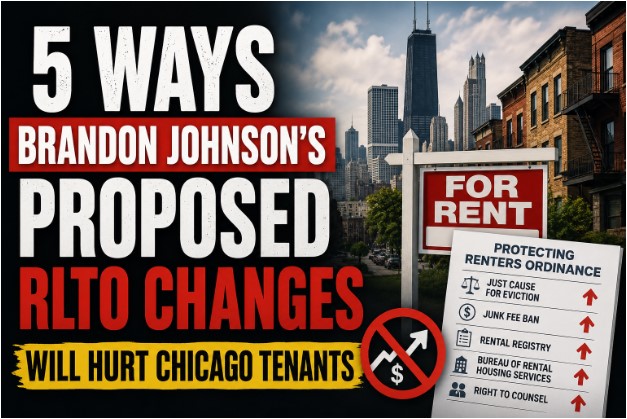
PRO has five major components: just cause for eviction, a ban on so called junk fees, a citywide rental registry, a new Bureau of Rental Housing Services to handle complaints and enforcement, and a codified Right to Counsel program that provides legal representation to tenants facing eviction. Supporters, including the mayor's office and tenant advocacy groups such as the Metropolitan Tenants Organization, say it modernizes a 40 year old law and protects renters from displacement and predatory practices.
It is still a draft. The measure is in committee review, a full City Council vote is expected in the fall of 2026, and it would phase in over 12 to 24 months after passage.
At GC Realty we manage roughly 1,500 units for over 500 private investors across the Chicago area, so we pay close attention to how rules like this play out once they take effect.
Key Takeaways
PRO is a proposal, not law yet. It is in committee review now with a possible full City Council vote expected in the fall of 2026, and it would phase in over 12 to 24 months after passage.
It has five main pieces: just cause for eviction, a junk fee ban, a citywide rental registry, a new Bureau of Rental Housing Services, and a codified Right to Counsel program.
The central critique from housing providers is that new costs and new rigidity do not disappear. They tend to get passed down to tenants through higher rents, fewer available units, and tougher screening.
Critics argue the tenants most affected would be renters with thin or bruised credit, good neighbors living next to a problem tenant, and anyone who relied on a flexible move in option to get into an apartment.
Supporters see the ordinance very differently. This article lays out the housing provider side of the argument, with supporter counterpoints noted throughout.
1. Fees Get Passed To Tenants Through Higher Rents
This is the big one, and it is the one supporters wave off the fastest.
PRO stacks a lot of new cost onto operating a rental building. There is an annual rental registry fee capped at up to $60 per unit. There is relocation assistance a landlord may owe when a tenant leaves through no fault of their own. There are new compliance requirements, new paperwork, and a brand new city bureau that owners help fund. Landlord groups have counted well over 100 new regulations in the draft.
Here is the thing about running rental housing. Costs do not vanish. When it gets more expensive to operate a building, that expense shows up somewhere, and it almost always shows up in the rent. And here is why it sticks. In a market with plenty of housing, supply and demand would keep that in check. A landlord who tried to pass every new cost straight to the tenant would risk losing that tenant to a better option down the block. But Chicago does not have plenty of housing. When options are limited, tenants have nowhere else to go, which hands landlords the leverage to pass those costs right on. The tighter the market, the more of every new fee and requirement the renter ends up absorbing. The Chicago Association of Realtors, the Chicagoland Apartment Association, and Illinois Realtors put out a joint statement making exactly this point. They argue the ordinance piles new financial burdens on responsible housing providers while doing nothing about the real driver of high rents, which is a shortage of supply.
Supporters counter that regulation always gets blamed for raising costs and that the protections are worth it. Fair enough. But if you are a rent burdened tenant already spending more than 30 percent of your income on housing, and the city says more than 40 percent of Chicago renters are, a rent increase driven by compliance costs is not an abstraction. It is your budget.
Here is the bigger truth that gets lost in all of this. The single best thing we can do for renters is solve the lack of housing crisis. Rents are high because Chicago does not have enough housing, plain and simple. When demand outruns supply, prices climb, and no ordinance changes that math. The only real fix is more housing, which means encouraging capital to flow into the city to build new units and fix up old ones. Changes like PRO do the opposite. Every new cost, fee, and layer of risk sends a signal to the people with the money to build and rehab that Chicago is a harder, more expensive place to invest. That capital does not disappear. It just goes somewhere else. And when the money that builds and improves housing dries up, the tenant is the one left competing for a shrinking pool of apartments.
2. Fewer Apartments And Tougher Screening
When you make it slower, costlier, and riskier to remove a tenant who is not working out, you change how landlords behave before anyone even signs a lease.
Under just cause, a landlord has to satisfy a narrow list of legal reasons to end or decline to renew a tenancy, and in some cases pay relocation assistance on top of it. So what does a rational owner do? They get far more careful about who they let in the door in the first place, because a hiring mistake is now much harder and more expensive to correct.
That caution does not fall on everyone equally. The renter with a perfect credit score and a spotless history will be fine. The renter who is rebuilding after a rough patch, who has a gap in their rental record, or who needs someone to take a chance on them is the one who gets screened out harder. Ironically, that is often the exact tenant these protections are meant to help. The renters who already have the hardest time getting approved today, the ones filling out application after application and getting turned down, are precisely the ones this pushes even further to the back of the line. If finding housing is a struggle for you now, a rule that makes owners more cautious only makes that struggle worse.
There is also a supply problem. The draft includes an informal rent control style piece that would let a tenant reject a renewal increase they consider unconscionable. Combine rules like that with higher costs and higher risk, and some owners simply stop investing in Chicago rentals or sell off units. Fewer units on the market means more competition for the ones that remain, which means higher rents and less choice for you.
3. The Junk Fee Ban And Deposit Cap Can Raise Your Move In Costs
This one surprises people, so stay with me.
PRO would ban or cap a long list of fees. Application fees, pet fees, certain tenant charges, optional service and amenity fees, and utility pass throughs are all on the list. The draft also points toward capping security deposits at one month of rent and effectively ending move in fees.
A lot of Chicago landlords, myself included, moved to a flat move in fee specifically because Chicago has one of the most punishing security deposit litigation environments in the country. A single paperwork slip on a deposit can trigger serious penalties, so many owners stopped taking deposits at all and charged a smaller, predictable move in fee instead. Plenty of tenants preferred that. It is less cash out of pocket upfront than a full month deposit.
Take that flexible option away and you push owners back toward large upfront deposits or stricter screening. That is more money you have to come up with on day one, not less. Same story with pet fees. If an owner cannot charge a reasonable pet fee to cover added wear, some will just stop allowing pets. If you have a dog or a cat, good luck.
Supporters argue these fees are predatory and that banning them protects renters from being nickeled and dimed. Some fees genuinely are junk and I will not defend those. But treating every fee like a scam removes tools that actually kept move in costs lower and doors open for a lot of tenants.
4. Problem Tenants Get Protected At The Expense Of Good Ones
Just cause sounds like it only stops unfair evictions. In practice it also makes it much harder to not renew a tenant who is making life miserable for everyone around them.
Mike Glasser, president of the Neighborhood Building Owners Alliance, put it bluntly. He warned that the just cause provision could force housing providers to renew the leases of people who disturb or harass their neighbors or even engage in criminal activity. Now, the draft does list serious lease violations as a just cause, so it is not black and white. But anyone who has managed real buildings knows how hard it is to prove that kind of behavior to a legal standard, especially when frightened neighbors will not go on record.
Think about who actually pays the price here. It is the quiet family down the hall. It is the single parent who just wants a safe hallway and a good night of sleep. When the rules make it slow and risky to move out the one household that is ruining a building, the good tenants are the ones who suffer, and eventually they are the ones who leave. That is not protecting renters. That is protecting the wrong renter at the expense of the rest.
5. Small Landlords Get Squeezed Out, Which Speeds Up The Corporate Takeover The City Says It Is Fighting
This is the contradiction at the heart of the whole thing.
Mayor Johnson has framed PRO as a stand against corporate consolidation and out of town owners buying up buildings by the thousands. I actually share that concern. But look at who can absorb 100 plus new regulations, a new fee, a new bureau, relocation liabilities, and a more complicated legal process. The big institutional operators with in house legal teams and compliance staff, that is who. They will be fine.
The small owner with a two flat or a single building, the classic Chicago mom and pop landlord who often charges below market rent and knows every tenant by name, is the one who looks at all this and decides it is not worth the headache. So they sell. And who buys? Very often the exact corporate buyers the ordinance claims to be worried about.
There are some exemptions in the draft for smaller owner occupied buildings and for nonprofit and subsidized housing, which is good and worth reading carefully. But the overall direction pushes the small, local, often more affordable end of the market toward the exits. When that housing stock shrinks, tenants lose the very landlords who tend to be the most flexible and the most affordable. That is a loss for renters, full stop.
Here is the part that makes this worse in Chicago specifically. Illinois and Chicago are already among the most tenant friendly and heavily regulated rental markets in the country. Between the RLTO, Cook County's RTLO, a growing patchwork of suburban rental licensing codes, and all the compliance hoops that come with them, a lot of investment capital already steers around Illinois and lands in landlord friendlier states instead. Every one of those rules adds another layer of risk and cost, and investors price that risk in before they ever buy. So we start from a smaller pool of capital than most big cities to begin with. Pile PRO on top and you push even more of it away. The ordinary investor and the small local owner get scared off first, while the only players who can still make the math work at scale are the largest, best capitalized operators. That is exactly how you end up with more consolidation, not less.
Where This Stands And What You Can Do
None of this is settled. PRO is still a draft in the Committee on Housing and Real Estate, and the committee has said it is welcoming feedback before the measure moves to a full Council vote expected in the fall. If it passes, it would phase in over the following 12 to 24 months.
That makes right now the window for input. Renters and owners alike can read the actual text, consider how it would affect their situation, and share their views with their alderman. The RLTO is 40 years old and there is broad agreement that parts of it need updating. The open question is whether this particular set of changes helps or hurts the tenants it is meant to protect.
Frequently Asked Questions
Is the Protecting Renters Ordinance law yet? No. It was introduced on June 29, 2026 and is currently in committee review. A full City Council vote is expected in the fall. If it passes, it would phase in over 12 to 24 months.
What is just cause for eviction? It means a landlord must give a valid, legally defined reason to evict a tenant or to decline to renew a lease. Listed reasons include nonpayment, serious lease violations, owner move in, major repairs, demolition, and condo conversion. In certain no fault situations, the landlord may owe the tenant relocation assistance.
What fees would the junk fee ban cover? The draft targets or caps fees such as application fees, pet fees, certain tenant charges like key replacement and returned payment charges, optional service and amenity fees, and utility pass throughs. It also points toward capping security deposits at one month of rent and ending move in fees.
How much is the rental registry fee? The draft caps it at up to $60 per unit per year, with a tiered structure based on property size so smaller owners pay less. Some owners, including certain owner occupied buildings of six units or fewer, nonprofits, and CHA or Housing Trust Fund units, would be exempt from registration fees.
Does this apply to small owner occupied buildings? There are exemptions for some smaller owner occupied buildings, particularly around registration fees. The just cause coverage in the draft is broader, so if you own or live in a small building, read the final text closely or talk to someone who knows it.
When would it take effect? It would roll out in phases over 12 to 24 months after it passes, if it passes.


Don't Go At This Alone!
Chicago's rental rules were complicated before PRO, and they are about to get a whole lot more complicated. At GC Realty & Development we manage roughly 1,500 units across the Chicago area, and staying ahead of ordinances exactly like this one is a core part of what we do every single day. Whether you own one unit or a hundred, we can help you understand what is coming, keep you compliant, and protect both your investment and your good tenants.
My mission has always been to help Chicago owners buy their time back and lower their risk so they can build real wealth through real estate without the ordinance headaches taking over their lives.
If you want a partner who reads the fine print so you do not have to, let's talk.
Related Resources